A rum inspired by a naval battle
Who would have imagined that the protagonists of the decisive Battle of the Saintes in 1782, which shook the waters of the Caribbean with cannon fire and bloodshed, would lend their names almost three centuries later to a bottle of rum? Our journey through remarkable rums continues, and with it comes the final instalment of the Rum Ledger mini-series. This last chapter takes us to a small Caribbean island with a distinctive rum production style. I recently had the chance to taste Admiral Rodney HMS Formidable, and I tried to capture as much as possible about this remarkable spirit. I did so in one of my favourite bars, Bluegrass in Koropi, where a good rum always seems to find its proper audience.
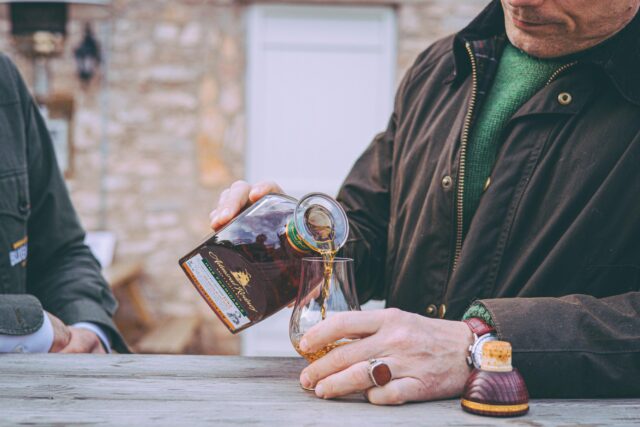
The battle behind the name
The Battle of the Saintes took place in April 1782 between the British and French fleets, in the waters between Guadeloupe and Dominica. The British fleet was commanded by Admiral George Brydges Rodney, while the French forces were led by Admiral François Joseph Paul de Grasse. The clash formed part of the wider theatre of the American Revolutionary War, as France had allied itself with the American colonies against Britain.
During the battle Rodney employed a tactic that later became famous as “breaking the line”. By cutting through the French battle formation, British ships were able to attack isolated enemy vessels at close range. Rodney’s flagship, HMS Formidable, stood at the centre of the confrontation. The outcome proved decisive: de Grasse himself was captured and a significant part of the French fleet was destroyed. Historians widely regard the battle as one of Britain’s most important naval victories of the eighteenth century. It effectively halted French ambitions for strategic control in the Caribbean and helped secure Britain’s dominance across several islands of the region.
The island of Saint Lucia
One of those islands is Saint Lucia, part of the Lesser Antilles. The island has often been nicknamed the “Helen of the West Indies”, reflecting the fact that it was fiercely contested between France and Britain. Over the course of its colonial history it changed hands fourteen times, passing repeatedly between the two European powers.
Today Saint Lucia is an independent nation and a member of the Commonwealth of Nations, with English as its official language. Yet the island’s culture still reflects both British and French influence, a blend typical of the eastern Caribbean.

Rum on the island
Like much of the Caribbean, Saint Lucia once relied heavily on sugar and rum production, traditionally using molasses as the base material. After the Second World War the sugar industry declined and many plantations closed. Molasses is now largely imported from elsewhere in the Caribbean and South America, but rum production never disappeared and remains an important national product. The island’s two historic distilleries, Roseau and Dennery, merged in 1972 as part of a broader effort to consolidate the local rum industry. The merger created St. Lucia Distillers Ltd., which today accounts for virtually all rum production on the island. Among its brands, Chairman’s Reserve is arguably the most widely recognised. For this article, however, our focus is on another label from the same distillery: Admiral Rodney.
A distillery with remarkable technical range
Some years ago I had the pleasure of speaking with Margaret Monplaisir, President and CEO of St. Lucia Distillers and former chair of the West Indies Rum & Spirits Producers’ Association (WIRSPA). Through that conversation I first became familiar with the distillery and the distinctive production style of Saint Lucian rum. At the distillery’s facilities four stills are currently in operation. These include a large twin Coffey column still with forty-five plates, as well as three copper pot stills. The combination of different still types, the use of both molasses and sugarcane juice as raw material, and fermentation with two different yeast strains allows the distillery to create eight different distillates. Such variety provides enormous flexibility when it comes to blending and ultimately leads to a wide range of rum styles.
Within the portfolio, Admiral Rodney represents the distillery’s more premium expressions, typically richer in esters, more flavour-intense and displaying longer maturation. Following a major rebranding a few years ago, the line has been positioned even more clearly as the high-end offering within the company’s range.

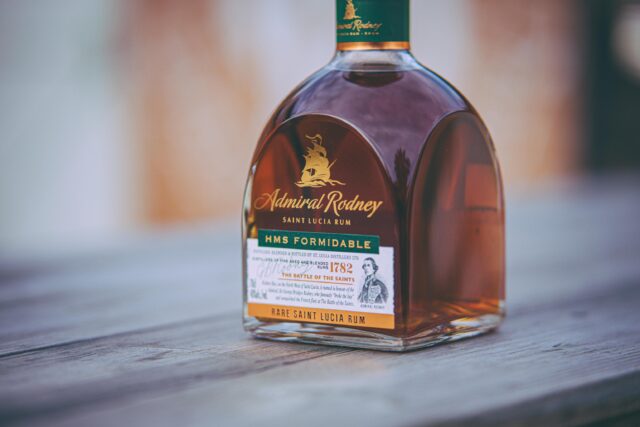
Admiral Rodney HMS Formidable
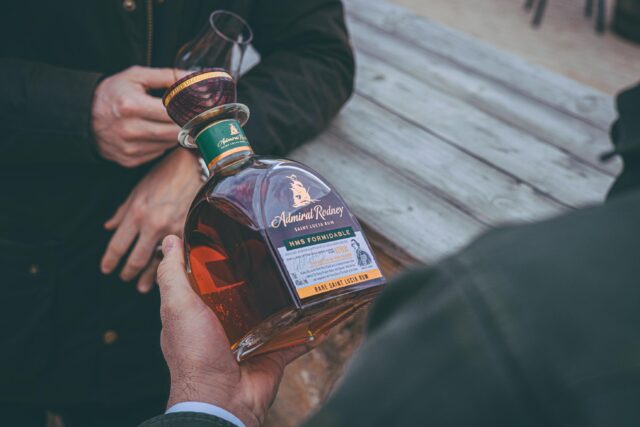
All rums in the Admiral Rodney series are named after ships that took part in Rodney’s fleet during the historic battle. Thus St. Lucia Distillers produces HMS Princessa, HMS Royal Oak, and the subject of this tasting, HMS Formidable —Rodney’s flagship and arguably the flagship of the brand itself.
The initials HMS stand for His Majesty’s Ship, the traditional prefix used for vessels of the British Royal Navy.
The blend of HMS Formidable is composed exclusively of distillates from the Coffey column still, collected from the lower plates of the column. In technical terms these are classified as heavy distillates, which means they carry greater aromatic intensity and structure.
All components in the blend have matured between ten and fifteen years in ex-bourbon barrels, with the ageing taking place entirely in the tropical climate of Saint Lucia.
Tasting at Bluegrass
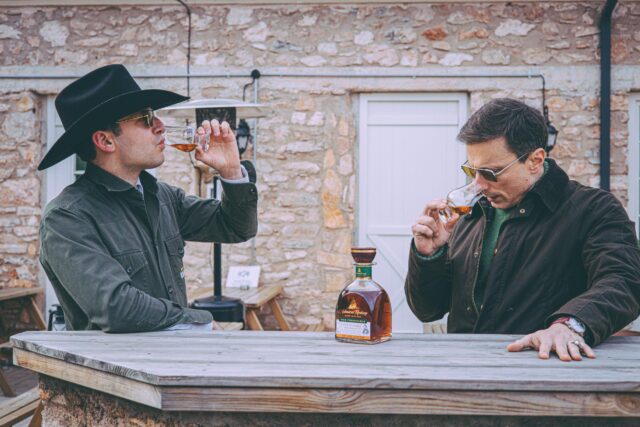
Enough theory. With a full bottle in hand, I headed to Bluegrass in Koropi to taste it alongside Andreas Botsaris.
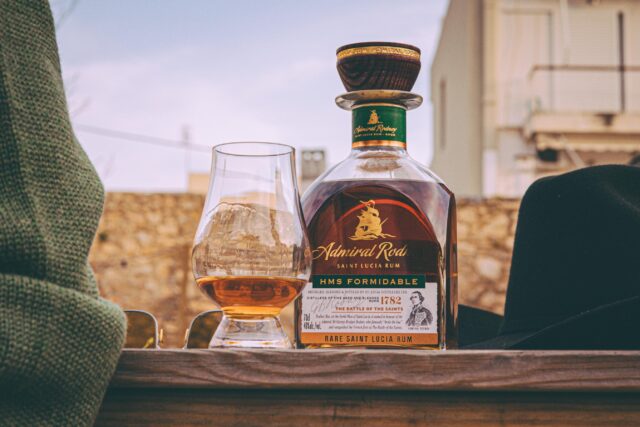
The afternoon light in the bar was perfect, highlighting the rum’s deep golden-to-copper colour, with bright orange reflections and elegant, thin ”legs” in the glass.
On the nose the first aromas that appeared were sweet baking spices, accompanied by milk chocolate and cocoa. Notes of tobacco, delicate solvent-like aromas, a hint of coconut, and even a faint iodine freshness followed.
On the palate the rum is dry, though I would not swear to the complete absence of added sugar. The influence of oak never becomes intrusive —likely the result of large, well-used barrels— and the finish is of moderate length. Overall the rum feels balanced and satisfying, slightly sturdier than the other expressions in the Admiral Rodney range.
Presentation
The rum comes in a beautifully designed bottle, square-shaped, reminiscent of old decanters traditionally used for aged spirits. It is bottled at 40% ABV, and in Greece it is distributed by Tsaknakis bros.
My warm thanks to Andreas Botsaris and the entire Bluegrass team in Koropi for their hospitality.
All photos by Antonis Tourzas, exclusively for Bitterbooze.com.