Listening to people’s needs, reading their faces and their eyes, understanding what they actually want. That’s how you demystify the legends of the bar world — when you realise that some of them simply don’t care about their guests.
Ask ten young bartenders on the street or behind their bar who they follow most online — who their idol is, if that word still means anything — and most of them will give you the same name: Danil Nevsky. It’s no coincidence that every bar he agrees to guest shift at fills up instantly, wherever in the world that happens to be, or that his seminars —genuinely interesting ones— sell out every seat. As it turned out, he’s just as compelling in conversation, with clear, considered opinions, especially on subjects that others tend to treat as a hot potato.
I first met Danil Nevsky, if I remember correctly, in 2013, long before he became known worldwide through Cocktails for You, or as Indie Bartender a little later. Certainly long before he was named Best International Bar Mentor at Tales of the Cocktail in 2024. Having worked in more than a dozen countries, created the world’s first fully independent global bartending competition, and with almost every project he touches finding a huge audience in the global community, that title felt like the natural culmination of everything he’d built.
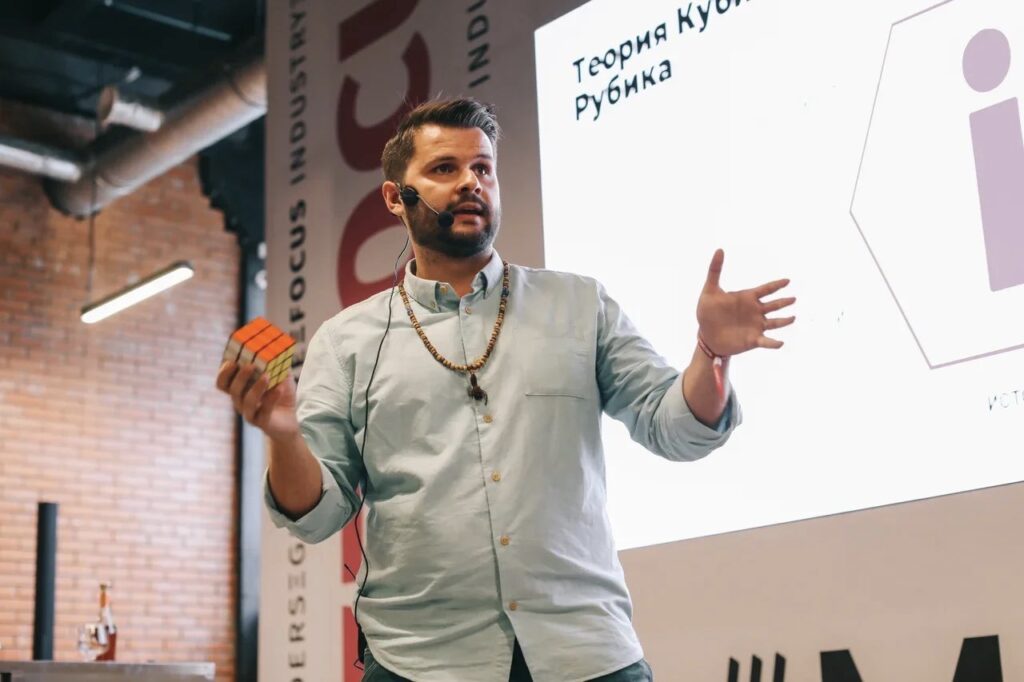
Danil Nevsky
Danil Nevsky on his different roles
Having succeeded in so many different roles, it’s striking that none of them is enough for him, at least not in the way those roles are conventionally understood today. «I wouldn’t want any of those jobs if I had to pick one,» he tells me, and it’s not arrogance talking. He’s already looking further ahead, toward something that may not yet have a name. He will admit, though, that public speaking gives him genuine pleasure —«if I could survive on it alone, I would»— and that he’d love to do more experiential pop-ups, more experimental, more extreme versions of everything. What really seems to interest him is the next level, whatever that turns out to be.
That said, although he considers his core character unchanged from who he was ten or fifteen years ago behind a bar, the thing that truly marked him, his own turning point, was the Vagabond Project. A sixteen-month journey, entirely self-funded, during which he worked in eleven different countries. No sponsor, no safety net. Midway through, shortly after landing in Kazakhstan, his appendix burst, and he ended up in hospital with a hole in his stomach. «That was a fairly clear signal about the lifestyle,» he says, laughing. He carried on anyway. He’d made a promise to himself.
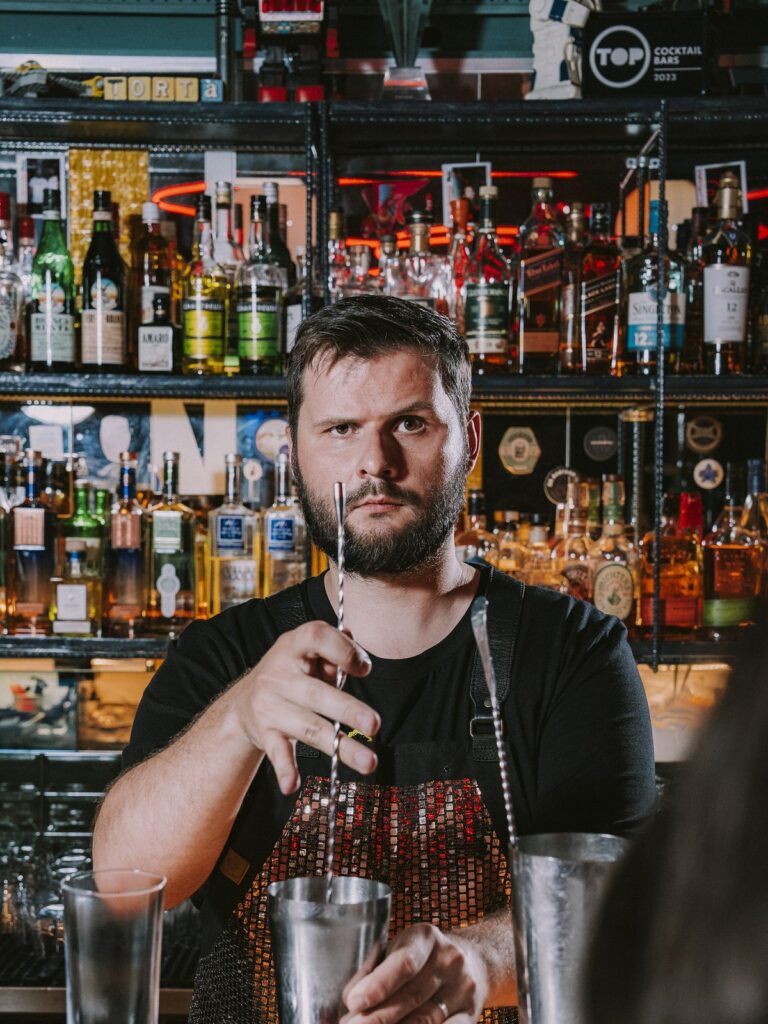
What he took from that journey isn’t the connections, or even the experience as a whole. It’s something harder to explain, the feeling that you don’t need much to survive. Your passport, your phone, and wherever the world takes you next. «I feel invincible because of that project,» he says. And you believe him.
What is the single most important innate quality a bartender needs and what’s the most valuable thing they can learn?
Asked what actually makes a great bartender —a question that usually produces answers about technique, knowledge, experience, and speed— he doesn’t hesitate: the ability to ”listen”. Not waiting for your turn to speak, but reading body language, picking up on tone, seeing how the other person actually feels. «When a guest feels heard, acknowledged, properly seen by the person serving them, you’ll be forgiven for almost anything» —because they know you care. Everything else, recipes, technique, leadership, is, as he puts it, just admin.
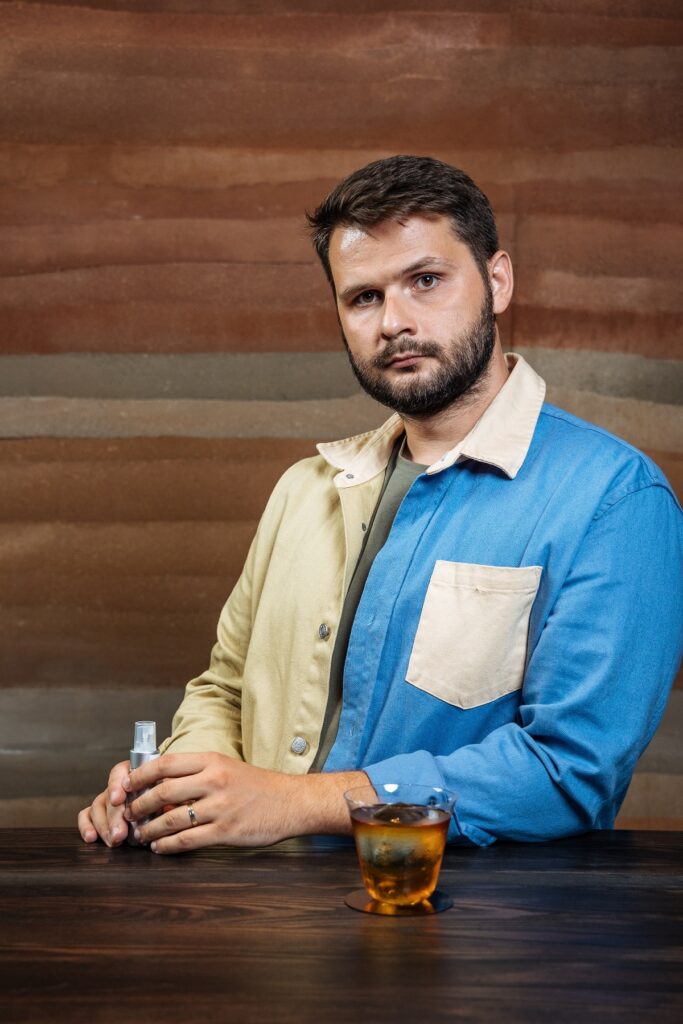
What many people don’t realise, and what he places real weight on, is the ability to turn that listening on and off and knowing when to do which. When he was younger, he didn’t know how to switch it off; he felt he had to be available to everyone, all the time. Age taught him that’s not sustainable and it’s not even good service. But there are people who have never switched it on at all. People who genuinely don’t care about others, and you can see it, in their face, in their eyes, in the way they hold a room. «Once you learn to spot it on a subconscious level, a lot of your heroes become nobodies. A lot of legends become losers.» He says it calmly, without malice. Like someone noting something that has disappointed him, but no longer surprises him.
The greatest cocktail ever invented!
He’s just as unconventional when I ask about the greatest cocktail of all time. «The real bartender’s test isn’t a Negroni, it’s a mojito,» he says. The original one, pre-Castro Cuba, with cubed ice. The same cocktail born out of a collision of technology, industrial leaps, and history —when refrigeration was still new, when rum had only recently been distilled cleanly enough to drink straight, when mass-produced carbonated beverages were just arriving, and Cuba was a volcano about to erupt. A drink enjoyed simultaneously by the rich, the poor, and the mafia. And despite becoming enormously popular between 2008 and 2013, today, in 2026, it’s a cocktail that almost no one, in his view, knows how to make properly.
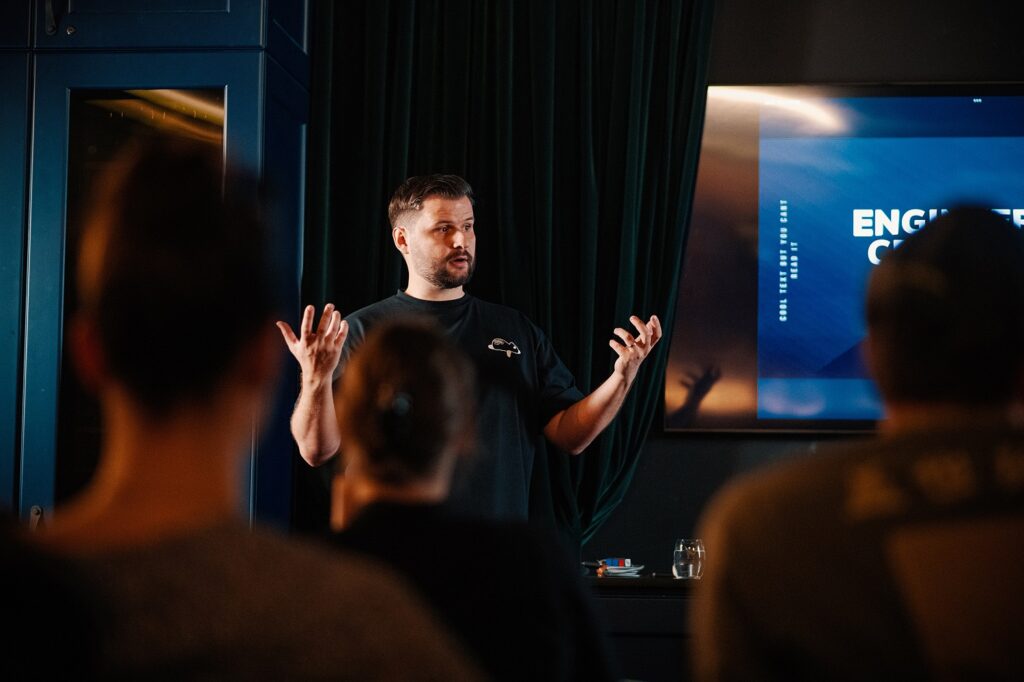
On the World’s 50 Best Bars
He has a crystallised opinion on almost everything in the industry, and he expresses it without diplomatic detours. I ask him about the 50 Best Bars and the conversation that periodically surfaces about their credibility. If he were put in charge tomorrow, he has four specific changes ready.
First, full transparency in the voting. «They used to publicise more of it, and now they claim a 50/50 split between male and female voters and so on, but I’d make the actual data public. It’s fair, and it’s overdue.»
Second, a tribunal. Anyone caught fixing votes or cheating gets a ban or a blacklist depending on how bad it was.«That alone would curb most of the corruption.»
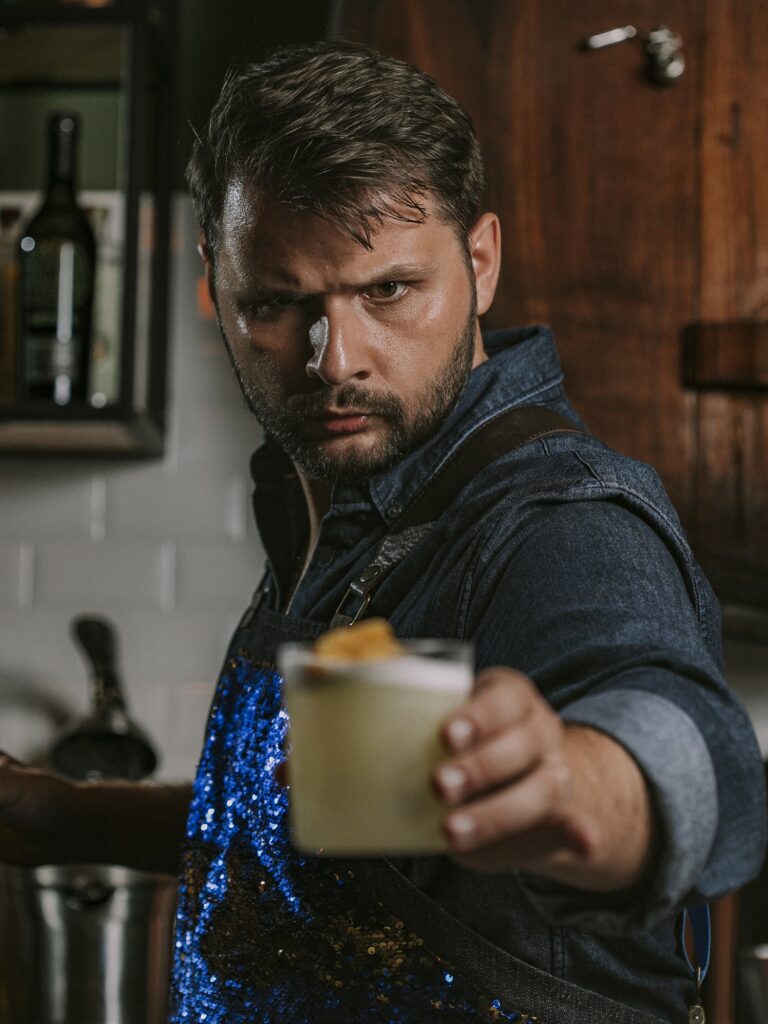
Third, shadow chairs in every region —a kind of deputy oversight role. The existing heads would stay, but each would have a shadow —«almost like a second party in a government»— whose job is to watch the first. Both with four-year term limits. «The shadow chair audits the first chair, and between them you police the chairs, the voters, and the bars at the same time. Real checks and balances»— power with a counterweight.
Fourth, a ban on any PR company partnered with 50 Best as an organisation from representing bars that are eligible for the list.«That’s a clear conflict of interest and it shouldn’t exist.»
He’d also want the regional heads properly funded so they’re genuinely obliged to travel and visit the bars they’re voting on. «Right now that incentive isn’t structured well enough.» What he wouldn’t touch? The Instagram, the publication, the PR, the branding, the voice. «All of it is great. Leave it alone.»
His view on the Greek bar scene
The same goes for the Greek bar scene, and here he speaks not just with opinion, but with knowledge and genuine affection. He’s been coming to Greece since 2014 or 2015 and has watched its trajectory up close. He describes it as a pantheon: «Everything, everywhere, all at once.» From Seven Jokers for Guinness and Fernet, to The Line with its next-level fermentation, from the unchanged Baba Au Rum to newer spots like Naked Athens and Barro Negro. But beneath the enthusiasm, there’s a pointed observation: «The current scene feels exhausted.» Those who did the heavy lifting, The Clumsies, Baba Au Rum, and others, pushed the rock to the top of the mountain like Sisyphus. And now they’re all tired. The bars have good lighting, good music, decent drinks, and full rooms. But whether there’s any real uniqueness left to distinguish one from another, he’s not sure.
I see it too and it makes me think. Is it the new generation, which hasn’t yet produced personalities with real stories to tell, people who have something to say beyond a well-made drink? Or is it the market itself, shifting consumer habits, people going to bars for different reasons than they used to? I don’t know. Danil Nevsky puts it down to the exhaustion of the professionals who built the scene.
Danil Nevsky on social media
He’s quick to add, though, that none of this is necessarily the community’s fault, it’s simply society moving, and the industry reflecting it. As for the single biggest specific change, he’s unequivocal: social media. As a fact, not a problem. «It’s the single biggest reason cocktail culture went global the way it did, and we have to respect it for that. It gave a voice to people who would never have had one.» The issue, however —and I agree completely— is that like any new tool, it can be used by the wrong people for the wrong reasons. People with better resources, better locations, more money are now in the game, and the democracy that once defined social media is slowly eroding. «The next generation is going to ignore us old fuckers and build a new bartending world anyway.»
Where does the spirits industry’s advocacy budget actually go?
I asked him about something that’s been on my mind for years: the advocacy budgets of spirits companies. I’ve watched brands cut these budgets further and further, year after year, without ever landing on a clear explanation for why. I wanted the perspective of someone with as much contact with the global drinks industry as he has.
«Spirits companies pulling back on bartender advocacy is a spinning wheel,» he says. Market conditions shift, stock prices move, and the budget follows. Money in, money out. Ambassadors hired, ambassadors fired. Brands invest in celebrities, stop, start again. Now it’s influencers. «The cycle doesn’t change.»
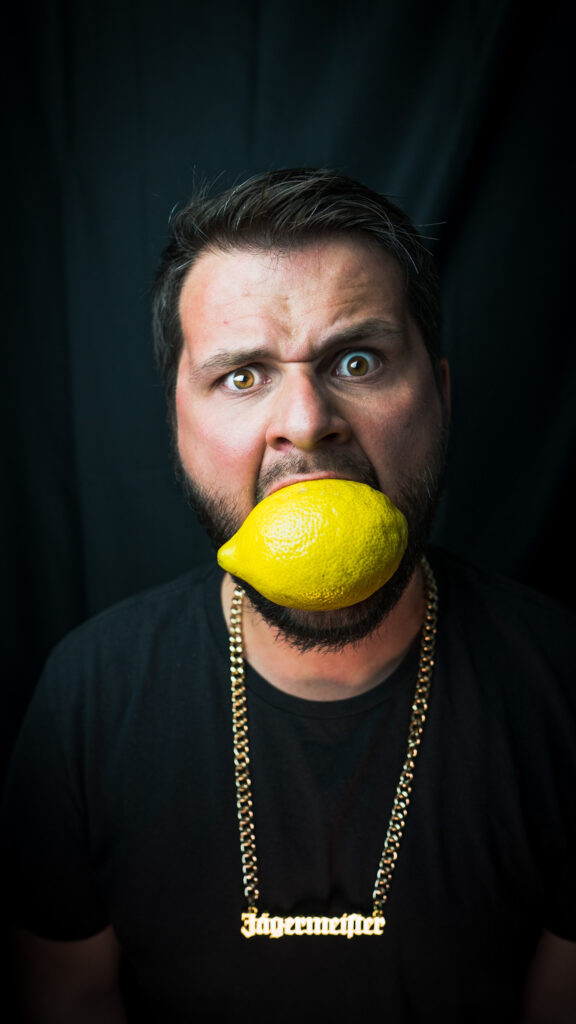
What does change, he says, is the geography. India is booming, China is booming, Southeast Asia is booming, that’s where the investment is going. In the western markets, where bartenders have become too demanding, don’t show up to events, don’t engage, the budgets get cut or repurposed. «Why pay a startender crazy money to bring a room full of people somewhere when you can fill a room without doing that elsewhere?» Western economies with high taxes are pushing people toward home consumption. Fewer people drinking out. So why put money into on-trade advocacy?
What keeps advocacy alive in the West, he says, is inter-company competition. For it to disappear entirely, all five major spirits groups would need to cut their budgets simultaneously, «which would require a conspiracy they’re not capable of.» Someone will always be investing, and the rest will compete. Advocacy isn’t dying, it’s being repurposed.
The truth that stings is something else, and this is where I feel Danil Nevsky touches something many in the industry sense but haven’t articulated: brands are pouring money into the most famous, highest-profile bars, the «1% bars», the ones that dominate the lists, believing the influence will trickle down to other bars and ultimately to the consumer. It doesn’t. These bars are often so niche, so detached from the mass market, that they don’t meaningfully move it. The money goes where the prestige is, not where the reach is. «And I don’t know how it’s going to be fixed,» he says. Honestly, neither do I.
Jerry Thomas & Harry Johnson walk into a modern bar
As our conversation moved toward its end, I asked him one more hypothetical question, this one requiring a fair amount of imagination. Could Jerry Thomas and Harry Johnson —the legendary fathers of the bar as we know it and of mixology itself— hold their own in a modern bar? And conversely, could Danil Nevsky have worked in pre-Prohibition America? His answer was categorical: «Jerry Thomas and Harry Johnson would not survive in the modern bar environment. The world they lived in isn’t compatible with ours.» The reverse, though, is straightforward. Any modern bartender would leave them behind on technique, knowledge, and flavour. «We’d just need to rebalance.» And the legends themselves? «We don’t really know who those people were as human beings. Most of the stories about them are just fabricated lies of PR.»
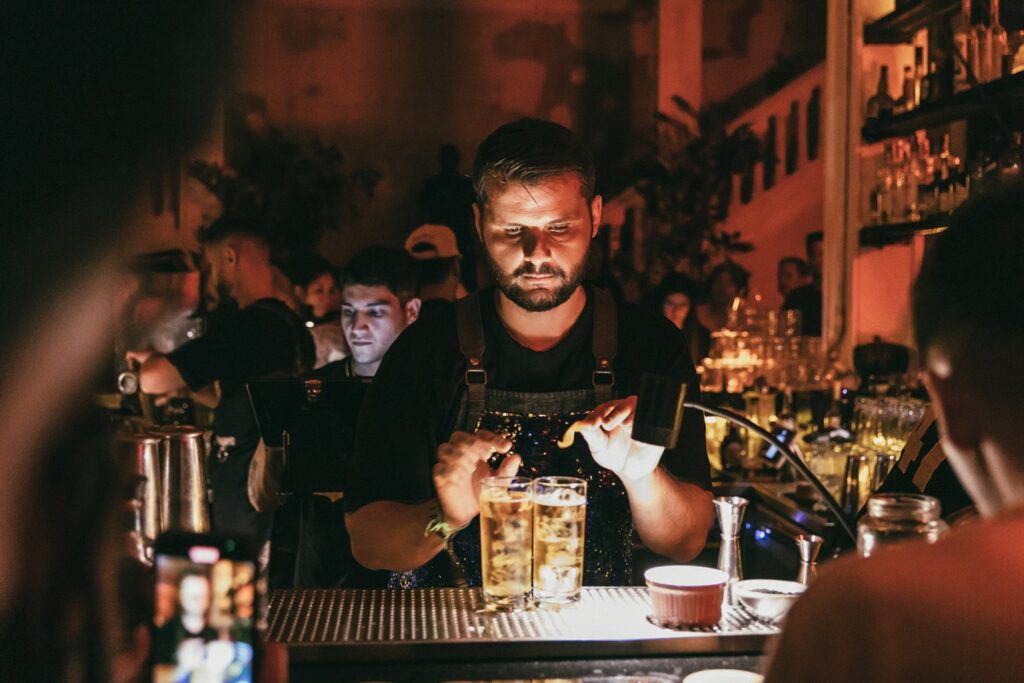
Barcelona and what’s coming next
We ended by talking about Barcelona, the city he’s called home for the past few years. Having said elsewhere that he doesn’t consider it the ideal city for a bartender to work in, he equally doesn’t believe an ideal city exists —only different places that teach you different things. His ideal bartender would carry a little London, a little New York, a little Singapore, a little Hong Kong, a little Mexico. Perhaps the speed and humour of a British bartender, the grit of a New Yorker, the hospitality of a Czech or Italian, the attention to detail of an Asian bartender, the energy of an Australian, the joy of life of a Latino. «And the resting bitch face of a Slav, with enough spice and flavour knowledge to back up all of the above!»
Despite the volume of roles and projects already in motion, Danil Nevsky has more in mind. I don’t know whether he’s mentioned these elsewhere, but I asked for announcements —even half-formed ones— and he delivered. The first involves a new project in Barcelona: a one-of-a-kind physical space focused on the bartender community, something he believes hasn’t been done before in this form. The second is the return of his own competition in 2027, bigger and better than before. Both sound entirely like him: ambitious, independent, and a step ahead of what the rest of the industry has thought of yet.