*Words by Giannis Ekaterinidis
The power of a drunken promise
It is 1994. The Bruichladdich distillery sits in a near-abandoned state, almost collapsing into itself, with weeds growing through the gutters and shutters hanging loose from their hinges. A man named Mark Reynier, who had first discovered the distillery back in 1989, tries to convince someone to let him through the gates for a look inside. To his great frustration, the answer is a blunt “no”. Irritated, he returns to the hotel where he is staying in Port Charlotte on the island of Islay to drown his disappointment with his brother over a dram or two of whisky.
As those one or two drams multiplied rather quickly, Mark became increasingly frustrated until, with the courage that so often accompanies intoxication, he declared that he himself would buy Bruichladdich Distillery, whatever it took.
His brother dismissed the words as nothing more than the exaggerations of a drunk man. Yet the idea had already taken root in Mark Reynier’s mind. A few days later, he sent an official letter to Whyte & Mackay, the distillery’s owner at the time, expressing his intention to make an offer. He sent another. And another. Every year, on the same date, for six consecutive years, until in 2000, Beam Inc., then parent company of Whyte & Mackay, finally agreed to sell the distillery to Mark, his friend and business partner Simon Coughlin, and 48 additional investors for £6.5 million. Alongside the buildings and equipment came 20,000 casks of whisky. One could say they bought the whisky and received the distillery as a bonus.
At the time, nobody expected that Bruichladdich, a closed distillery in 1994, would eventually transform into one of the world’s most progressive whisky brands.
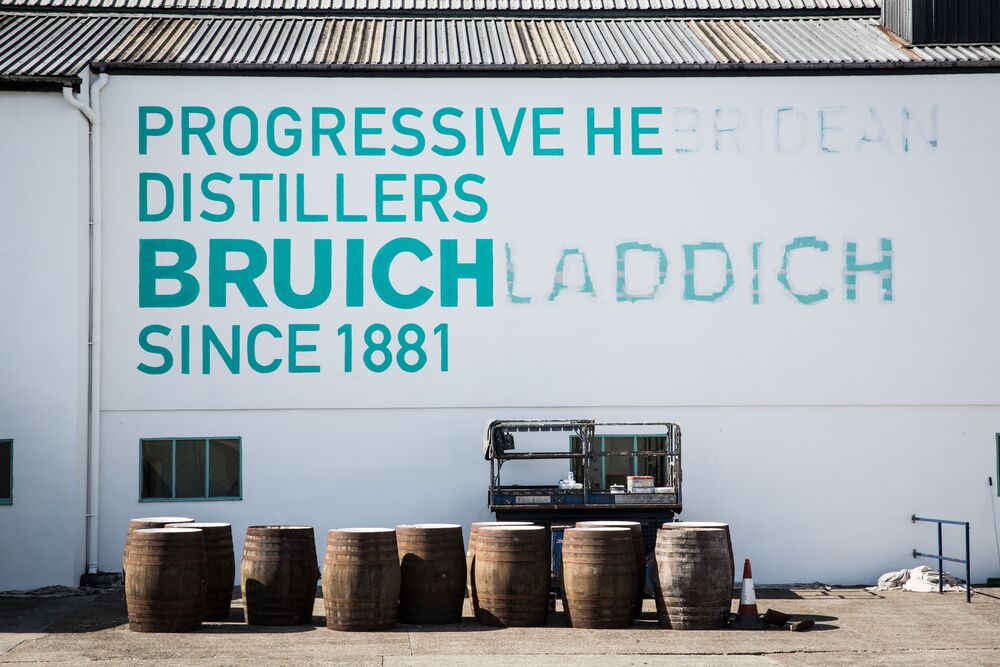
There is something almost cinematic about this story. A closed distillery on the edge of the Atlantic, a stubborn entrepreneur, and a promise born late at night somewhere between too many drams of whisky.
Brands that shaped the industry: Bruichladdich
Beyond the product itself and the charm of its story, however, Bruichladdich also represents, in strictly professional terms, one of the clearest examples of modern brand development within a deeply traditional and tightly regulated industry such as Scotch whisky. Its success, as we shall see, was never built on scale or cost reduction. It was built on strategic choices that changed both the identity of the distillery itself and the way consumers perceived the product. That is precisely why Bruichladdich has earned, in my opinion, the right to stand as a case study in its own right and deserves to be described, if not as a brand that defined its category, then certainly as one that redefined it.
Brand positioning & storytelling
From the very first day of its revival, it became obvious that the new ownership had invested heavily in differentiation. Yet this differentiation was never superficial, nor was it confined to marketing slogans.
On an island such as Islay, where peat functions almost as a rule and a defining element of local distillery identity, Bruichladdich consciously chose to move against the current and present a different profile altogether, broadening the spectrum beyond the typical image associated with Islay whisky.
Although today The Classic Laddie is regarded as the emblematic core expression of modern Bruichladdich, the early years following the distillery’s reopening were marked by intense experimentation and a vast range of bottlings. There were many occasions when the brand was criticised for lacking character and for displaying little consistency between releases.
The first meaningful expression of the brand’s new unpeated identity was the “Laddie Ten”, which acted both as the precursor to The Classic Laddie and as the transition point toward the distillery’s modern character.
Rather than follow the dominant flavour profile of the region, the distillery chose to challenge it. That strategy not only avoided isolating the brand, but ultimately made it more recognisable and gave it a distinct and clearly identifiable position within the market.
Something perhaps not widely known is that Bruichladdich, whose name derives from Gaelic and roughly translates as “corner of the shore” or “gentle slope by the sea”, never historically possessed the heavily peated identity associated with other Islay distilleries. There are, however, strong indications that part of its older production did contain light peat influence. This is mainly evident in older bottlings, particularly distillates from the 1960s through the 1980s, as well as independent releases from companies such as Gordon & MacPhail and Cadenhead’s, where descriptions such as “subtle peat” or “coastal smoke” appear frequently.
Even so, that smoky character was never a central or systematically defined feature of the distillery. It functioned more as a soft background note reflecting the less standardised production methods of the era, especially since much of the spirit was destined for blended whisky. In other words, Bruichladdich’s modern unpeated profile did not emerge accidentally, nor was it a simple continuation of inherited tradition. It was a deliberate strategic decision made by the new owners.
It would also be unfair not to mention that Bruichladdich is not the only unpeated distillery on Islay, as Bunnahabhain has traditionally produced unpeated whisky as well. The essential difference, however, lies in the strategic use of that characteristic. In Bunnahabhain’s case, the unpeated profile exists primarily as a historical trait inherited from the past, rather than as a central element of commercial storytelling. Bruichladdich, on the other hand, consciously transformed that decision into a defining element of its identity, using it to redefine what an Islay whisky could mean. On an island globally associated with peat, “The Laddie” introduced itself as something different. At the same time, it built a powerful narrative around provenance, terroir, and transparency.
For the Scotch whisky industry of the early 2000s, this approach bordered on heresy.
That direction was also closely linked to a major shift in production leadership. Jim McEwan, one of the most iconic figures in modern Scotch whisky history, took over as master distiller upon the distillery’s reopening in 2001. After decades at Bowmore, he brought with him a deep understanding of tradition combined with a bold and experimental mindset. Under his guidance, expressions such as Port Charlotte and Octomore were created, with Octomore eventually reaching phenolic levels above 200 ppm, while most heavily peated whiskies remain between 40 and 60 ppm.
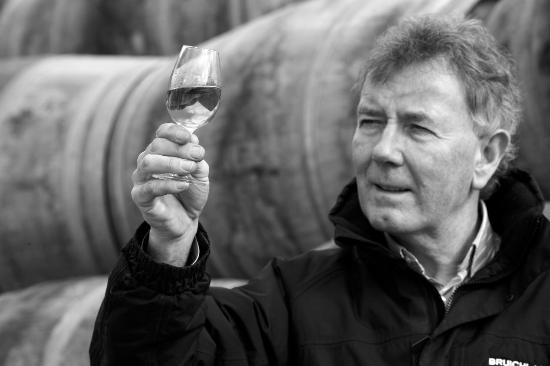
Reviving the distillery required more than McEwan’s expertise and a spirit of renewal. It also required people who knew the distillery from within. Among them was Duncan MacGillivray, former engineer and head brewer at Bruichladdich, who had experienced the distillery long before its closure.
Dave Broom writes in The World Atlas of Whisky that when Mark Reynier acquired the distillery, this was not a classic modernisation investment. The distillery had been silent for years. The equipment was old, worn, and largely forgotten, belonging to another era of Scotch whisky production, while the available capital did not allow for major renovation or automation.
“We were borrowing money to fund production, using the whisky stocks as collateral,” recalled Allan Logan, production director and member of the small team that brought Bruichladdich back to life. “In those early years, we were simply trying to make the distillery work properly. Everything else came later.”
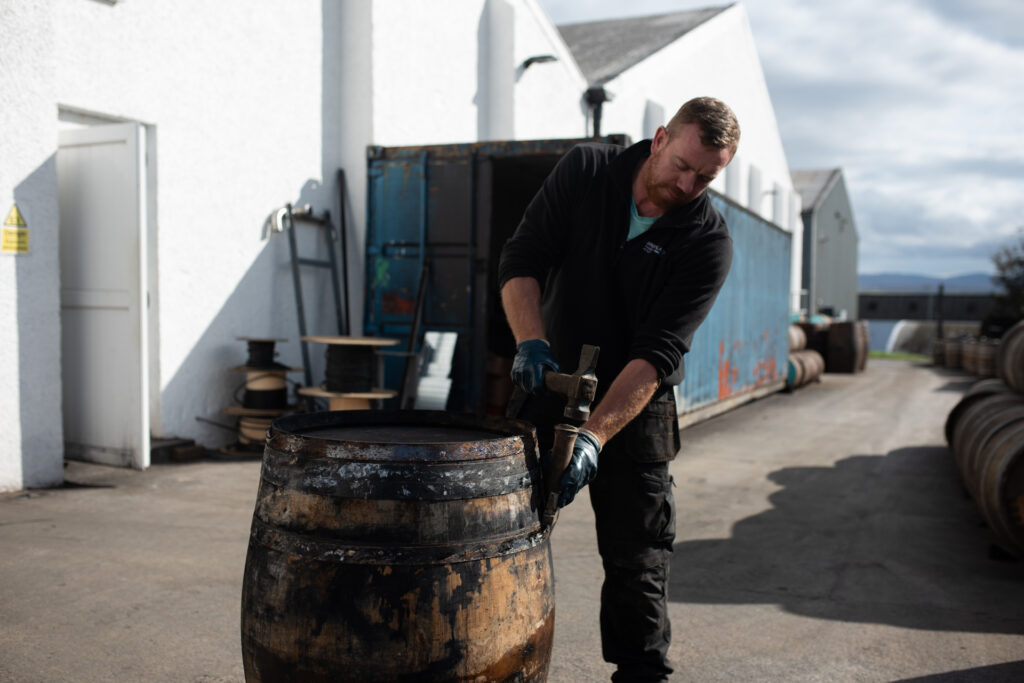
Rather than pursue complete technological transformation, Reynier and McEwan consciously chose to restore the distillery as closely as possible to its original state, preserving the traditional stills and relying far more heavily on manual production methods.
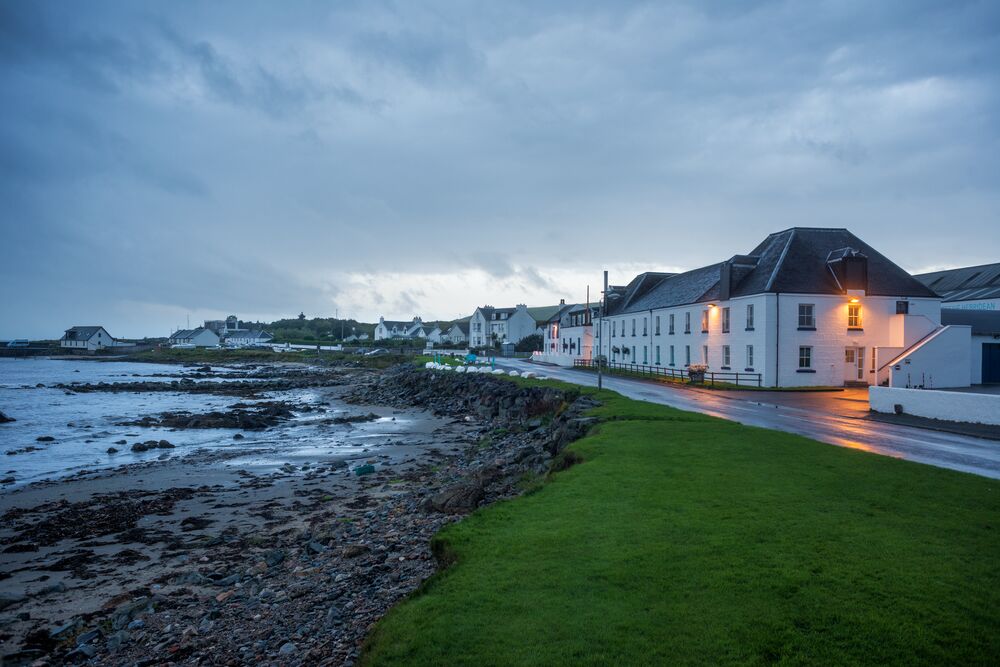
“The place was in dreadful condition in 2000,” Simon Coughlin later recalled in an interview. “The buildings probably hadn’t been painted in ten years. Jim used to say there had never been any serious investment there. Ironically, that helped us enormously.”
While many distilleries had already modernised and automated, Bruichladdich faced no pressure to change everything. “It still works and produces exceptional spirit,” he explained. What began as necessity gradually evolved into philosophy.
Despite the handcrafted nature of production, the first years remained difficult. Although the distillery theoretically possessed an annual production capacity of roughly 2 to 2.2 million litres of pure alcohol, after reopening it initially produced only around 250,000 litres. Growth came slowly and cautiously.
That did not prevent the distillery from receiving major recognition and awards within the whisky world almost immediately after its revival.
In 2015, following Jim McEwan’s retirement, the torch passed to Adam Hannett, who had already spent many years at the distillery. The transition became a textbook example of successful succession because, rather than breaking from the past as many might have expected, it delivered continuity and evolution. Hannett maintained the experimental spirit while strengthening the structure and consistency of the releases. Such transitions often create serious problems. Bruichladdich managed to avoid them, due in large part to Hannett’s personality, who, I can assure you, is one of the warmest and most easygoing people working in whisky today. As I often say, it is not easy succeeding a living legend, unless you happen to be Adam Hannett.
Particularly important, and worth emphasising, is the very period during which the distillery remained closed. In 1994, under Whyte & Mackay ownership, Bruichladdich ceased operations after being considered an inefficient asset.
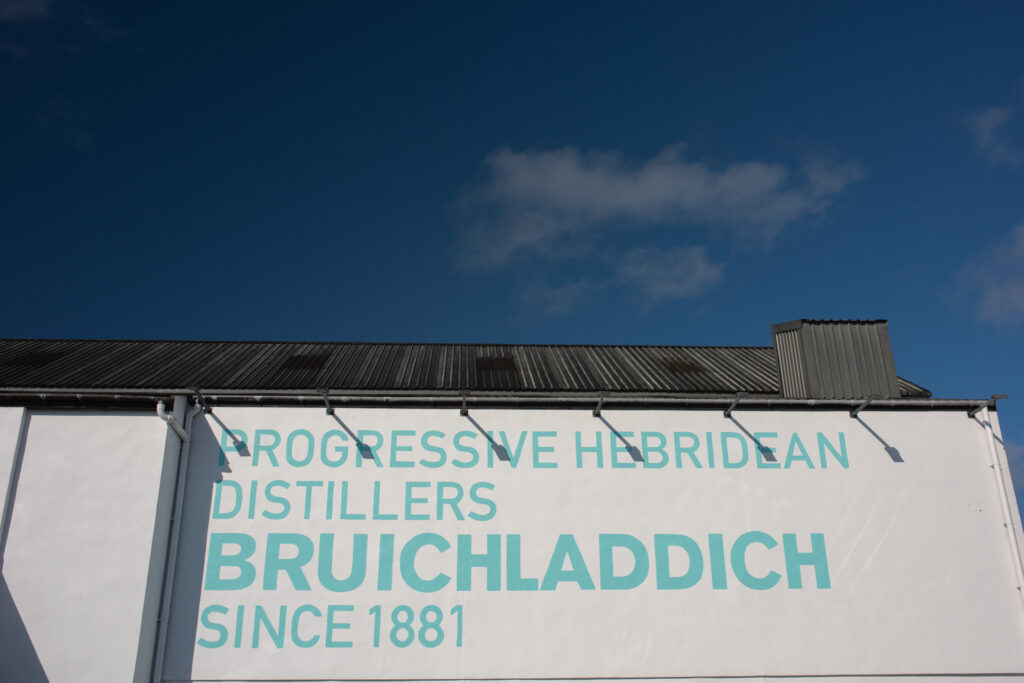
That very “gap” allowed the distillery to break free from the weight of the past and create a new identity. Unlike distilleries operating continuously and often trapped by historical practice, Bruichladdich used its restart as an opportunity for radical change. Perhaps, in the end, closing down was exactly what allowed it to be reborn.
Another defining aspect of Bruichladdich’s strategy was its use of specialised maturation expertise. Mark Reynier, born in London in 1961 and raised within the wine trade through his family’s French wine importing and bottling business, possessed significant experience in cask management and selection, particularly from the wine world. That knowledge found its way into the distillery through the use of casks sourced from regions such as Bordeaux, Burgundy, and Rioja. This practice did not remain limited to secondary releases but gradually became part of the distillery’s very identity.
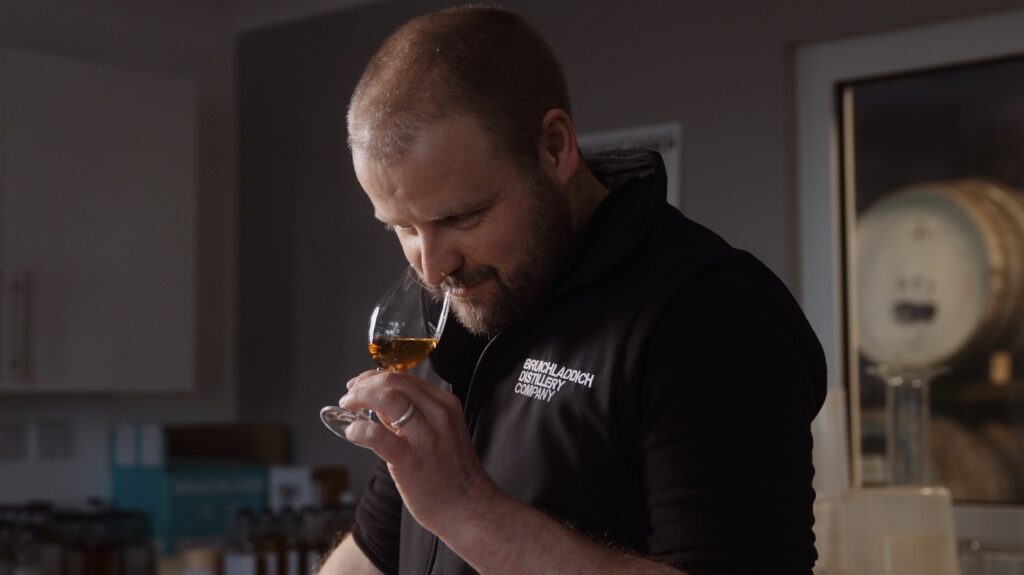
“The first job at Bruichladdich was assessing the inherited whisky stocks,” Reynier told the Irish Times in 2020. “Anything pre-1973 was extraordinary. Anything after 1973 was flat and matured in poor-quality casks. We spent almost seven years moving whisky into better wood.”
Wine cask maturation allowed the creation of more complex aromatic profiles, differentiating the spirit from competitors. At the same time, it reinforced the broader narrative of provenance and diversity, turning each bottling into something unique.
Micro provenance and R&D
Bruichladdich never limited experimentation to the spirit itself. It constantly experimented with the storytelling surrounding the brand as well.
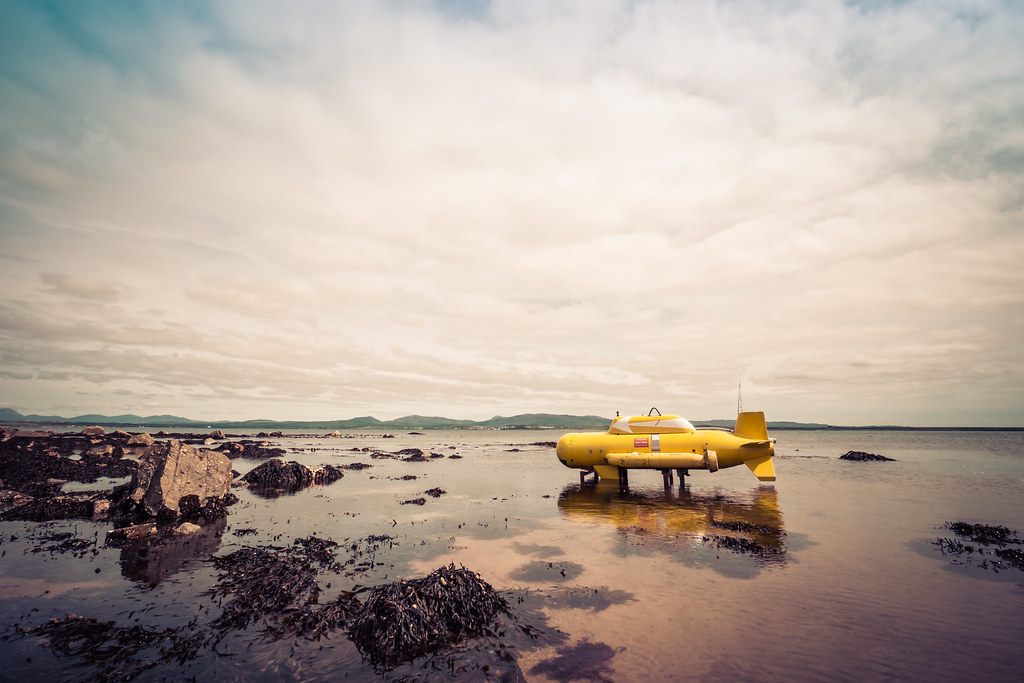
A characteristic example was the almost surreal story behind the famous WMD II “Yellow Submarine”. In 2005, a local fisherman discovered a lost Royal Navy remotely operated submarine vehicle drifting off the coast of Islay. For weeks, it reportedly sat in the garden of a local coastguard member until the British military finally admitted ownership.
Bruichladdich immediately embraced the story and released a limited bottling featuring the submarine on the label, redefining WMD as “Whisky of Mass Distinction” rather than “Weapons of Mass Destruction”. It was exactly the kind of humour, spontaneity, and unconventional communication style that defined the distillery during that era.
Another fascinating example, one that in my opinion combines nearly every element of the distillery’s philosophy, is the Micro Provenance range. The distillery itself describes it as an “exploratory range of single cask bottles”, and through these releases Bruichladdich invested heavily in extreme differentiation and absolute transparency. Operating almost at the edge of independent bottling culture, the range functioned as an experimentation platform, with each release representing a unique batch carrying clearly defined production characteristics, creating whiskies that felt more like personal projects than conventional bottlings.
Through these releases, the distillery experimented with different raw materials and cask types that could later be applied to larger-scale products. It could innovate without risking the integrity of its core range while, simultaneously, the transparency accompanying the series earned it a cult following among whisky nerds and consumers who wanted to know precisely what they were drinking.
Despite the enormous number of experimental releases produced over the years, the structure of Bruichladdich’s portfolio remains a model of strategic clarity. With three core pillars, Bruichladdich for unpeated whisky, Port Charlotte for heavily peated expressions, and Octomore for lovers of extreme peat, the distillery successfully addressed different sections of the market without creating confusion. Each range functions as a standalone identity with a distinct audience and clear message.
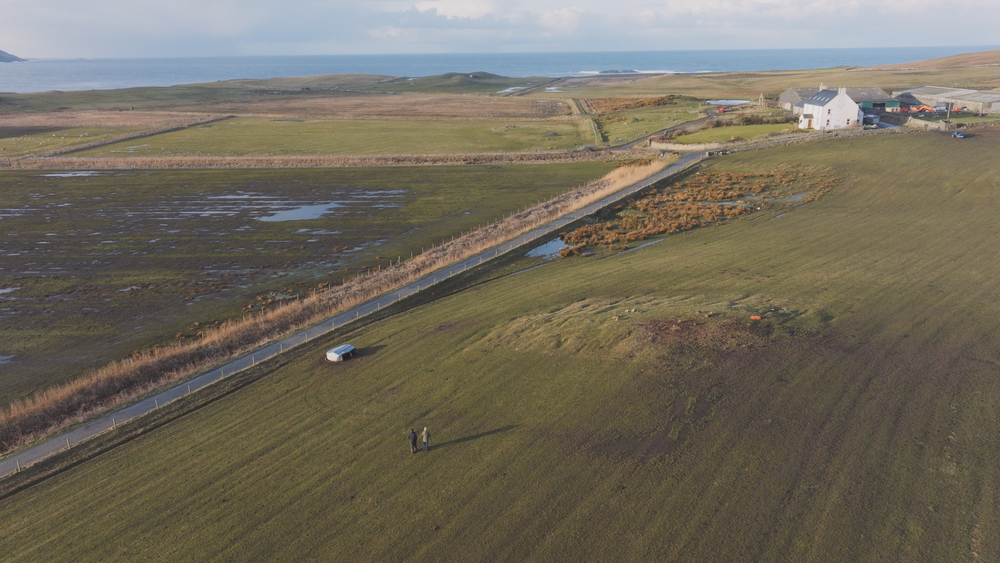
A major role in the distillery’s development was also played by its acquisition by Rémy Cointreau in 2012 for approximately £58 million. Within just twelve years, an investment of roughly £6.5 million had increased almost ninefold in value, and notably without relying on aggressive industrial expansion. The transformation stands as one of the most remarkable success stories in the modern Scotch whisky industry.
“Once they completed due diligence and understood what they had actually bought, they realised it was something unique,” Coughlin said in a 2016 interview. “I know that if the company had been sold to another Scotch whisky competitor, much of what we built here would have been destroyed. The Islay maturation, the Islay bottling, this whole effort to bring everything back to the island.”
The small, unconventional Islay distillery had now gained access to a global distribution network. At the same time, it retained significant autonomy in decision-making, allowing the continuation of its existing strategy.
The principles of transparency remain at the heart of the company today, driving not only the creation of iconic single malts but also The Botanist gin, which evolved into one of the world’s most successful premium gins.
Today, under Rémy ownership, the stills run almost continuously, day and night, five and a half days a week. According to Coughlin, this constant operation improved both equipment stability and spirit quality.
Following the acquisition, the company adopted a more mature and disciplined strategy without losing the experimental character that had originally shaped it.
“We grew up,” Coughlin said in May 2016. “We are no longer the young rebels trying to tear everything apart. We still enjoy pushing boundaries, we just no longer rip up the rulebook.”
Corporate social responsibility
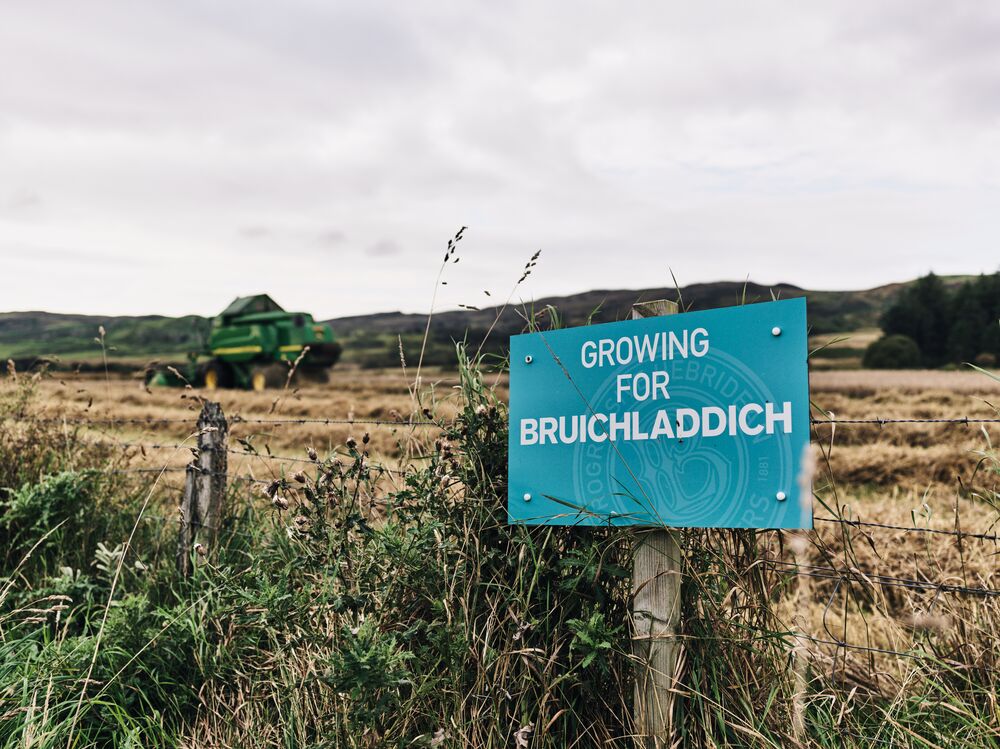
Bruichladdich’s deep commitment to Islay itself is perhaps the most important element of the distillery’s modern history. Beginning in 2003, the company started working with Islay farmers to grow barley for production, something that had not happened on the island since the war years, placing special emphasis on traceability, provenance, and barley variety, including ancient Bere barley. This almost obsessive focus on barley eventually led to projects such as the regional barley trials, where different barley varieties from different regions are monitored separately from field to cask in an attempt to transfer the concept of terroir from the wine world into Scotch whisky.
The positive impact on the local economy proved enormous.
On a small island where agriculture had slowly begun to disappear, Bruichladdich effectively gave the fields a reason to exist again. To fully understand the scale of that impact, without this initiative it is entirely possible that agricultural production on Islay might have vanished altogether.
Beyond agriculture, with distillation, maturation, and bottling all taking place on Islay, Bruichladdich is arguably the island’s largest private employer, something especially remarkable considering the number of distilleries operating there. Only malting still takes place off-island, in facilities near Inverness.
Another crucial point of differentiation lies in the distillery’s environmental approach.
Within the regulatory framework governing whisky production, strict requirements already exist, such as mandatory maturation for at least three years in oak casks and production within Scotland in order for a product to be labelled Scotch whisky. At the same time, however, issues such as energy consumption, carbon emissions, and water management are becoming increasingly regulated through British and international climate policy.
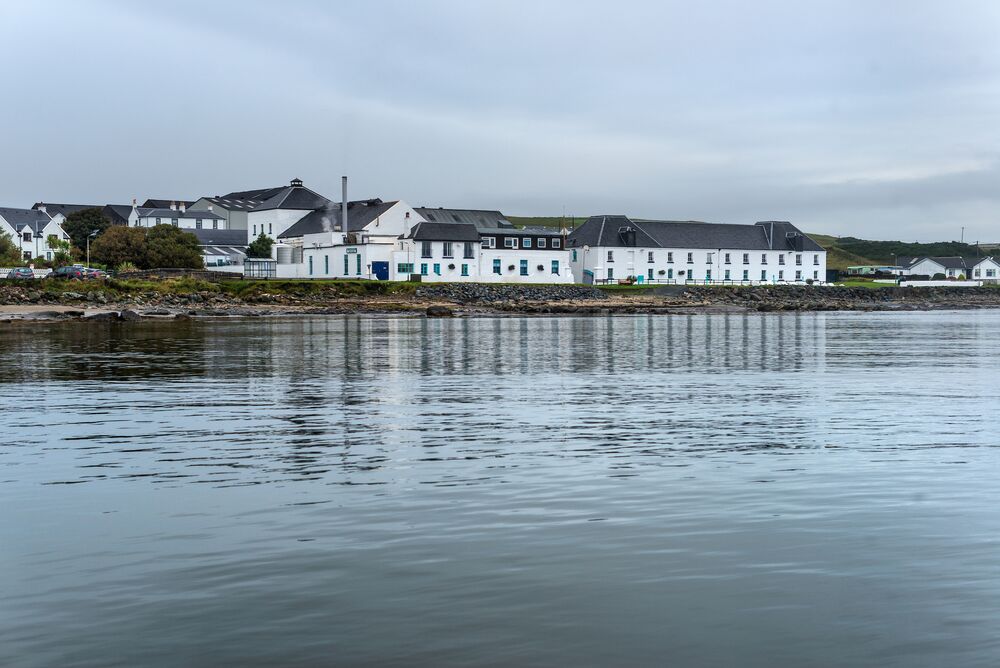
In 2019, during a live broadcast on BBC Radio Scotland, the distillery publicly announced its goal of fully decarbonising distillation operations (scope 1 and 2) by 2025. The statement reportedly surprised both insiders and outsiders alike, yet it became a defining turning point in Bruichladdich’s sustainability strategy, forcing the company to accelerate solutions and publicly account for its progress. Although full decarbonisation has not yet been achieved, enormous progress has been made.
Among the distillery’s standout initiatives are the hydrogen project, The Botanist Foundation, and the “One Tin Lighter” campaign.
Perhaps its greatest achievement in this area, however, is the fact that since 2020 Bruichladdich has held B Corporation certification, meaning it is assessed under strict standards regarding environmental and social impact, transparency, and practices toward employees and the local community.
In packaging, the distillery has significantly reduced single-use plastics and shifted toward recyclable materials, recognising that the bottle and packaging form a substantial part of whisky’s overall environmental footprint. It also publishes regular sustainability reports, offering a level of transparency still rare within the industry. Even so, whisky production remains highly energy-intensive and water-demanding, and Bruichladdich has not yet fully transitioned to renewable energy or achieved carbon neutrality.
Regardless of whether one agrees with every decision it makes, it is difficult to deny that the distillery approaches sustainability far more seriously than most of the industry.
Bruichladdich stands today as living proof that even within one of the world’s most traditional and tightly structured industries, there remains room for innovation. From a nearly abandoned distillery on the shores of Islay, it evolved within just a few years into one of the most influential whisky brands of the modern era, with a distinct identity, a powerful philosophy, and global influence, rewriting the rules of the game without ever relying on industrial scale or mass production logic.
Sometimes, and this is where I shall end, major change does not begin with size or power, but with the persistence of a few people determined to do things differently.
*Baptised many years ago in the water of life, Yiannis Aikaterinidis remains a devoted lover of three ingredients: water, malted barley, and yeast. In 2009, he packed a backpack and travelled to Scotland for the first time to see how his favourite spirit was created. Since then, he has visited dozens of distilleries and gathered hundreds of stories filled with peat, spice, and citrus notes. He is a founding member of the Greek Whisky Association (G.W.A.) and the author of numerous online articles dedicated to his favourite spirit.