Over the past few years, sustainability has taken center stage in the conversation around bars and hospitality. From sourcing ingredients and managing waste, to production techniques and cocktail menu philosophy, sustainability is often presented as a given. Almost as a moral framework for how a bar should operate. In practice, though, the more this conversation gets generalized, simplified, or reduced to solutions that “look good” but deliver little real impact, the harder it becomes to understand what actually works, why it works, and what the real benefit is.
This is where Lost + Found Drinkery enters the conversation. Always ahead of the curve when it comes to how a bar actually operates, the team launches this series to share practical solutions with a clear, measurable impact. Not only on the environment, but on the business itself. Solutions that don’t treat sustainability as a badge of virtue or a marketing tool, but as a set of decisions that directly affect costs, labor, and the long-term resilience of a modern bar. Through concrete examples, the series aims to show how practices with real environmental impact can also strengthen a bar’s efficiency and overall viability.
Lost + Found needs little introduction. Since opening in 2013, it quickly established itself as a reference point not only for the Cypriot bar scene, but for the global one. Over the years, it has put Nicosia firmly on the world bar map, helped shape the contemporary Mediterranean bar identity, introduced new voices, and contributed to the spread of modern bar practices. At the same time, it has consistently rethought what hospitality and the overall bar experience can be.
From sourcing and day-to-day operations to team training and consistency behind the bar, Lost + Found has built its reputation on practices tested daily in real working conditions. More importantly, decisions have always been made based on outcomes, time, and available resources, in an environment where sustainability had to be practical rather than just another fashionable talking point.
One of the biggest issues with today’s sustainability discourse is the way it often treats waste in overly simplistic terms. Waste is framed as something inherently bad that must be eliminated at all costs, without asking how and when it is created, what resources have already been consumed, or what the real cost of managing it actually is. As a result, many practices labeled as “sustainable” simply shift the problem further down the line instead of solving it.
A typical example is the assumption that any form of reuse is automatically positive. In theory, turning by-products into new ingredients sounds ideal. In reality, it often requires additional equipment, more labor, and increased energy consumption. When the final result is a product with limited use or marginal benefit, the original by-product hasn’t been eliminated. It has simply been turned into a more complex and expensive process with little net gain. Like a garnish that will end up in the trash anyway, just in a different form. As the team itself puts it: “you’re just delaying the bin.”
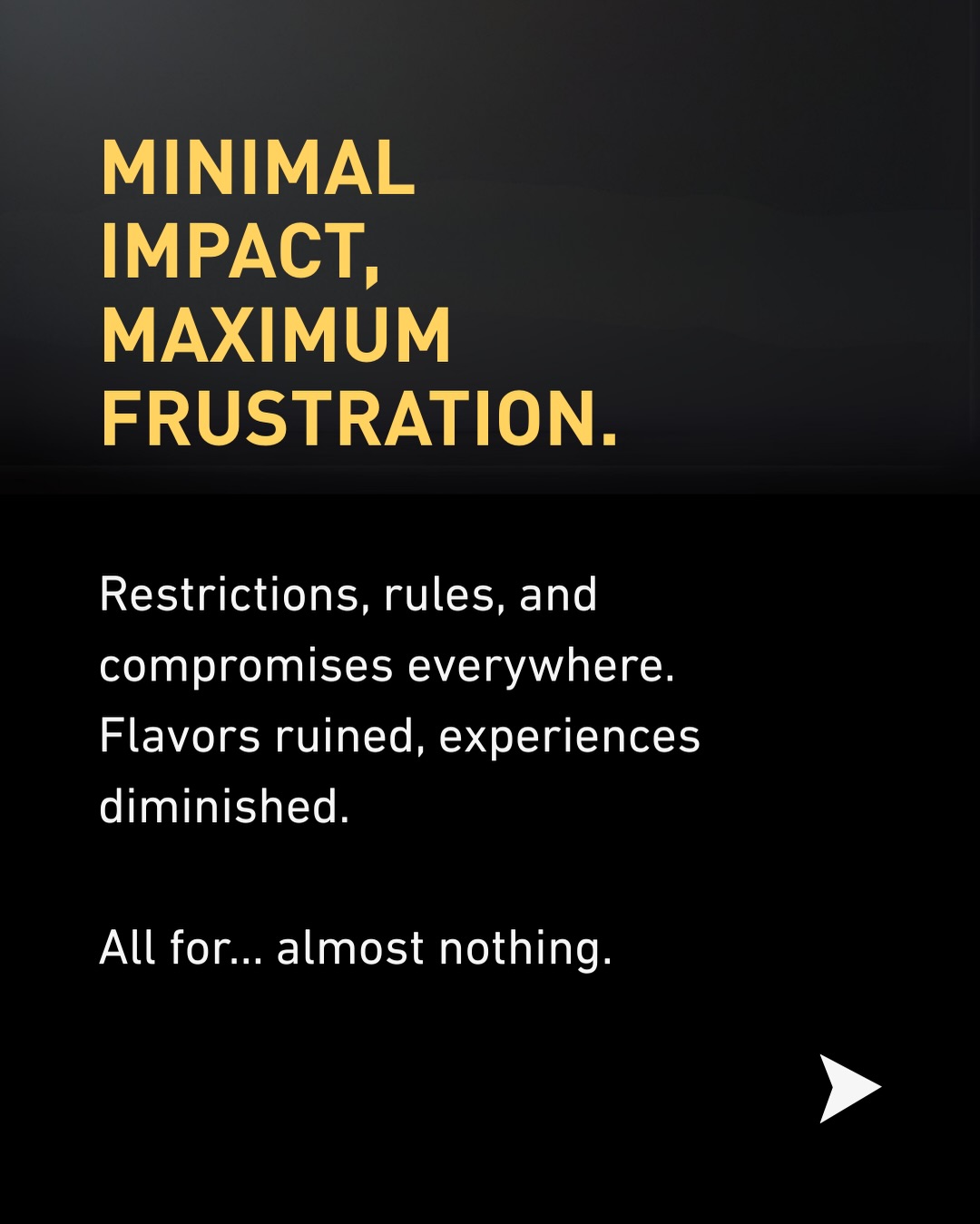
This distinction sits at the core of Lost + Found’s approach. Ingredients and by-products are evaluated, not moralized. What’s worth reusing, what isn’t, and most importantly, why. In many cases, the most responsible choice is to acknowledge that further processing will consume more resources than it saves. At that point, disposal becomes a conscious decision, not a failure, and certainly not something to hide behind feel-good sustainability narratives.
The same logic applies to practices that have become almost unquestioned in modern bars. Paper or bamboo straws used exclusively. The obsessive push to use every part of every fruit. Techniques adopted en masse because they’re trending, without considering whether they actually fit a bar’s real needs or capabilities. And without even asking what the guest experience looks like at the end of it all. Is there really no waste when you have to go through two or three paper straws just to finish a drink?
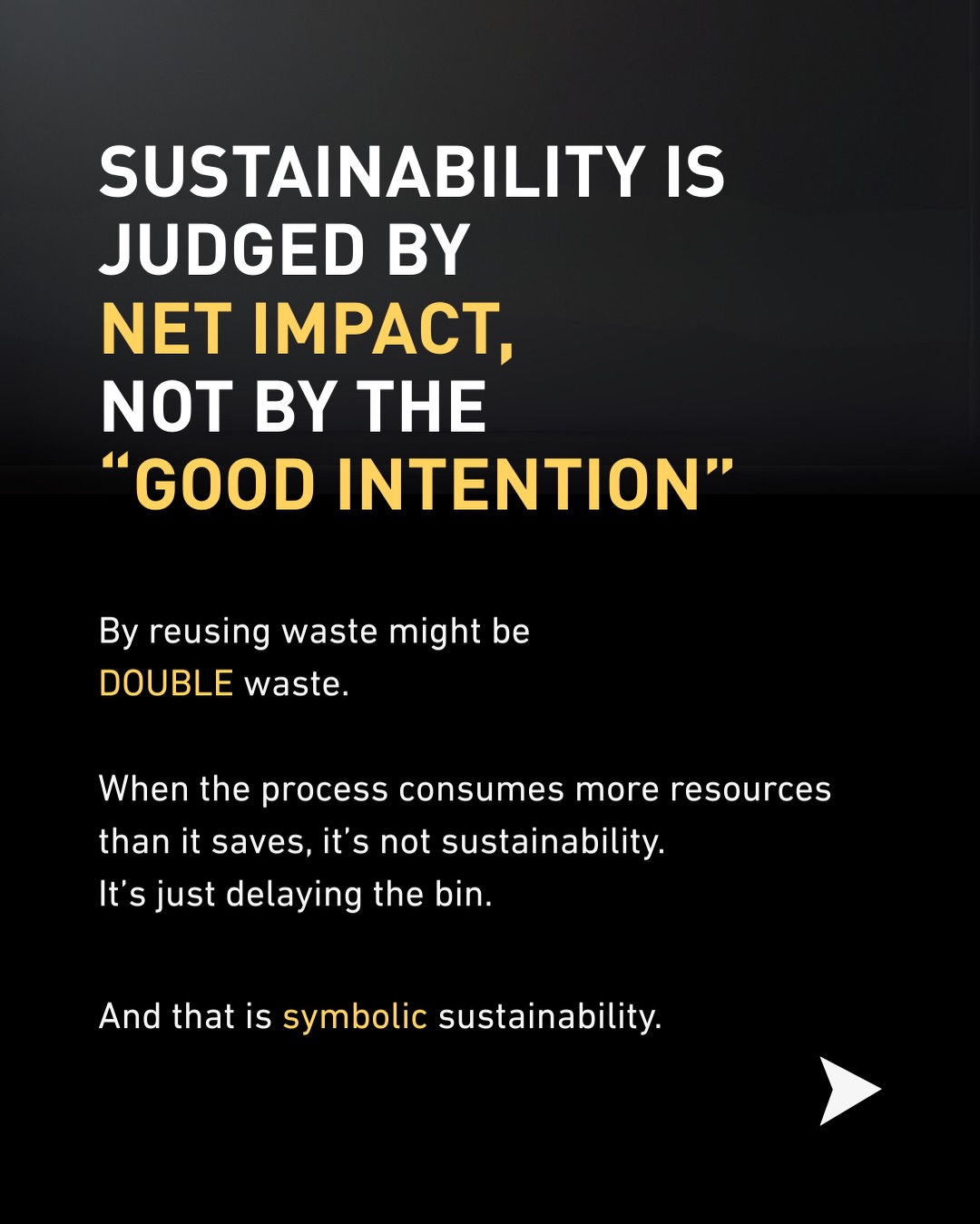
At Lost + Found, a practice is evaluated on one basis alone: does it deliver measurable results? Does it reduce waste? Does it save time? Does it ease the workload on the team? And does it ultimately strengthen the long-term resilience of the business?
Through this series, Lost + Found aims to share exactly this way of thinking. As a starting point for discussion, but also as hands-on practices that can be applied, tested, and shared with colleagues. The goal is to move the conversation away from symbolism and back to decision-making. To show that sustainability is not about intention or optics, but about continuous evaluation. And that every choice should be judged by its net benefit. For the environment, yes, but also for the business that has to operate consistently, sustainably, and within real-world constraints.
P.S. Calculations are indicative and based on AI-assisted analysis using Lost + Found’s internal data.