He carries nearly six decades of experience on his shoulders, most of them spent as a master blender in some of Scotland’s most celebrated distilleries. His nickname, ”The Nose”, therefore comes as no surprise. That brilliant career grants him a rare privilege: he is one of the very few who genuinely know what whisky ”used to be like”—a line repeated like a mantra among aficionados— as he began making whisky back in 1966. His achievements, awards, and bottlings are countless, and within the whisky world he stands as perhaps the most recognisable and one the few well respected master blenders. I had the rare opportunity to speak with Richard Paterson OBE —awarded by the Order of the British Empire for his contribution to whisky— in an exclusive interview that offered a vivid portrait of both the man himself and the brands that shaped his journey.
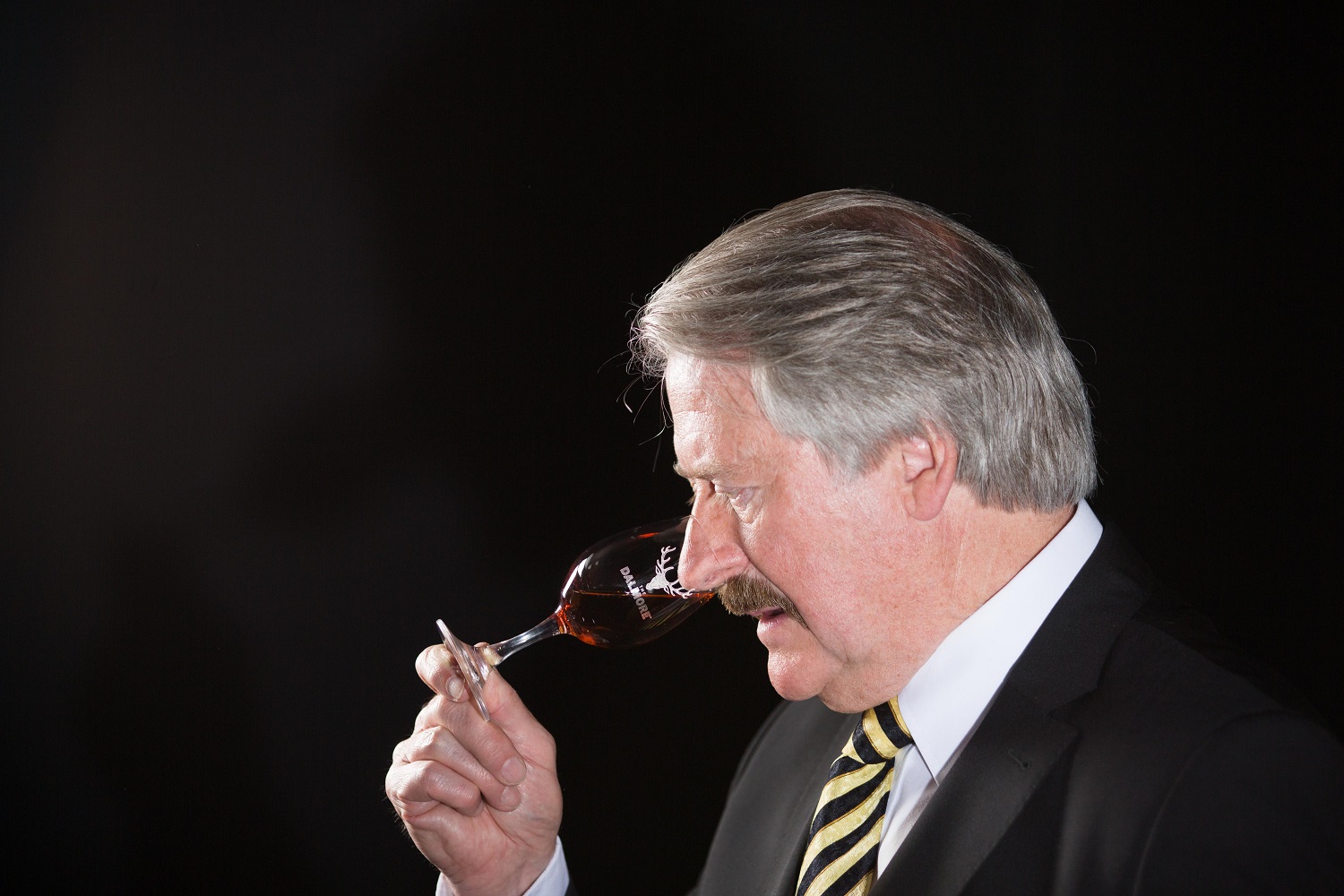
That’s how it all began.
Richard Paterson still recalls his first visit to a whisky warehouse, ”around the age of eight.” The darkness, the cold, the silhouettes of the casks and above all, the smell of ageing whisky, seem to have defined him. His father urged him to take his time: ”Look at the colour, smell it, ask yourself what’s happening in the glass.” From that moment, he admits, something sparked inside him. It was excitement, the urge to understand the ”why” and the ”how.” And more than half a century later, every time he steps into a warehouse, a quinta or a bodega, he says he still feels the same shiver, the same desire to discover something more.
His professional journey began in earnest in 1970 when he joined Whyte & Mackay, becoming master blender five years later. Over the decades, he was responsible for several of the company’s flagship brands —the single malts of The Dalmore, Jura, Fettercairn, and Tamnavulin, as well as the Whyte & Mackay blends. The same passion, he says, carried him through a career marked —I reminded him— by successive changes in ownership. Yet the work itself never wavered: ”My role has always been to maintain character, quality, and consistency. Whatever was happening around us.” For someone of Paterson’s calibre, quality and flavour consistency were never negotiable.
I remind him of something he once said: ”My passion for whisky is even greater today than when I started, because people today are genuinely interested in learning about it.” With that in mind, and knowing he has witnessed the highs and lows of the Scotch industry, perhaps more than once,I ask whether he has reached a conclusion about what new whisky drinkers look for today. He believes there is no single answer, though he emphasises balance above all. His first piece of advice is simple: ”Don’t rush. Take your time. Smell it first. Hold the whisky in your mouth before you swallow. Harmony and balance are the ticket to quality.” And that harmony, for him, is no abstract term; it is the coming together of several elements without any one dominating the others.
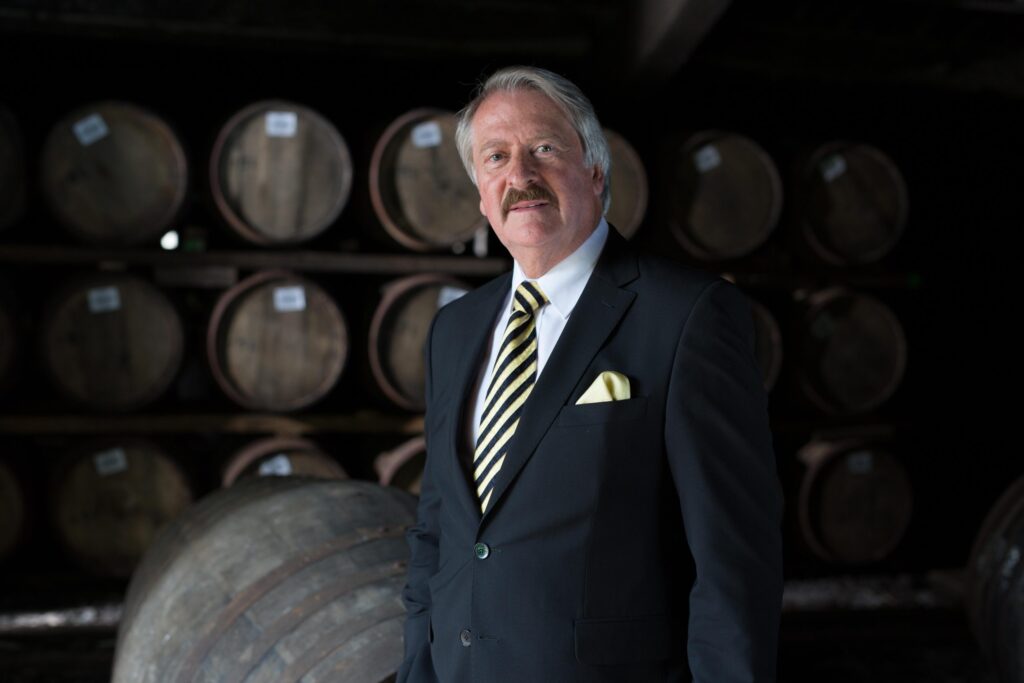
The Dalmore’s approach and style
This philosophy is especially evident in The Dalmore, the single malt with which Richard Paterson became almost inseparably associated. He believes the distillery’s strength lies not only in its long history but, above all, in its approach to cask curation and maturation as a whole. Unlike most distilleries that state they use sherry casks, The Dalmore uses only those that previously held thirty-year-old sherry, sourced from the same partner for over a century. This, he explains, gives their whisky the style they seek: depth, intensity, and a distinct layer of luxury. ”Even so, it must never dominate. Like black in a painting, it has to serve harmony. That’s what elevates the whisky to another level.”
Beyond The Dalmore, Richard Paterson has led a number of unconventional and pioneering projects: recreating Mackinlay’s Rare Old Highland Malt Whisky —the very whisky Sir Ernest Henry Shackleton took on his early-20th-century Antarctic expedition, bottles of which were unearthed in 2007— developing Nomad Outland Whisky, which matures in Spain, and overseeing emblematic releases such as the Trinitas 64-Year-Old and the Paterson Collection. Yet the personal highlight of his career, he says, remains King Alexander III. He describes it as the ultimate expression of what he had been explaining: a convergence of different elements and different casks that creates harmony.
Indeed, the whisky draws on casks that once held port, madeira, marsala, cabernet sauvignon, bourbon and Matusalem oloroso sherry, each contributing to the final blend in its own way. Not in equal proportions, but ”in those ratios that give a beautifully balanced result at 40% ABV, the ideal strength for enjoying it.” For Richard Paterson, King Alexander III also tells a story: the legendary Fury of the Stag* and how the Mackenzie family earned its crest. Above all, though, it is a whisky that ”can turn an ordinary dinner into a banquet.”
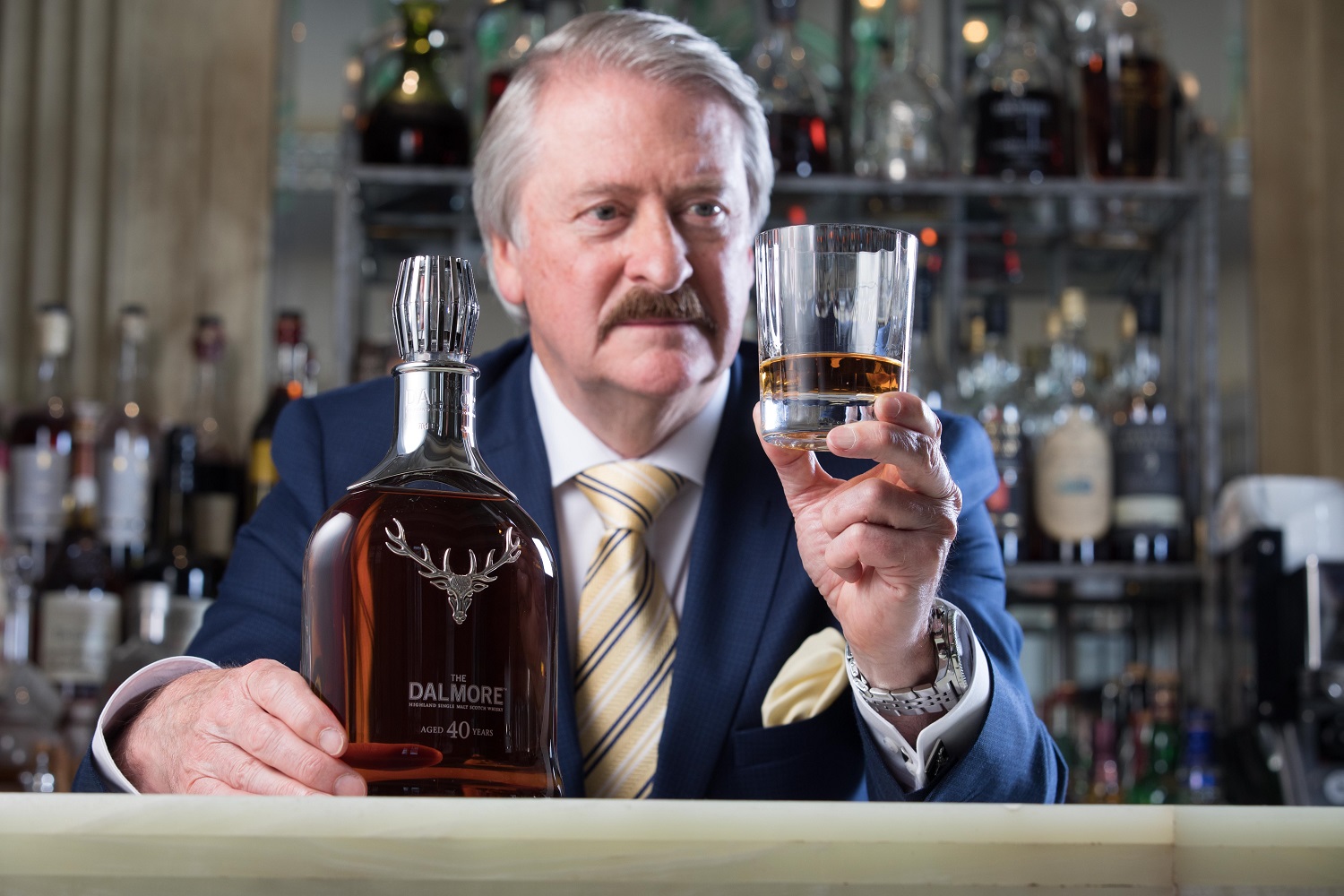
Richard Paterson on independent bottlers and whether whisky was better then or now
I ask him about independent bottlers and whether he feels the trend surrounding them has begun to fade, as some suggest. He explains that independent bottlers do not differ fundamentally from any other company or brand. They may have fewer resources or smaller production capacity than major distilleries, but they share the same determination to bring their product to the world. In the end, the decisive factor is always the same: flavour.
With someone who has experienced whisky both then and now, it is impossible not to ask about overall quality. Has it declined? Improved? Are we drinking better or worse whisky today, and what has changed over so many decades? Paterson is unequivocal: ”Production is better today, but what people look for in a whisky has changed.” Even the language used to describe whisky has evolved, he explains. Certain words like ”raw” or ”fiery”, once served as a shared vocabulary among drinkers. Today, he says, consumers know much more and prioritise consistency and quality. ”From a production perspective, there is far more control and analysis now, ensuring that whisky is at its very best.”
I try to provoke him a little, asking whether there is any whisky from another distillery he wishes he had created. He explains that although he tastes countless whiskies as a judge for industry awards, he always returns to his own work, his ”rare jewels” aged over sixty years and the Principal Collection of The Dalmore.
Whisky and Marketing
As our discussion draws to an end, I touch on marketing, something many of us feel is prioritised perhaps too strongly today. I ask about its influence on how whisky is judged. He acknowledges that marketing plays a role, but not at the core: ”Whisky must stand on its own.” Packaging, communication, everything matters, but the priority is singular: quality and flavour.
I also ask his view on transparency in production, something he strongly supports. He recalls the whisky festivals of the late ’90s as the beginning of a new openness that brought producers and consumers closer together. While ”some things cannot be shared”, an open conversation within the industry is good for whisky and reflects growing consumer interest.
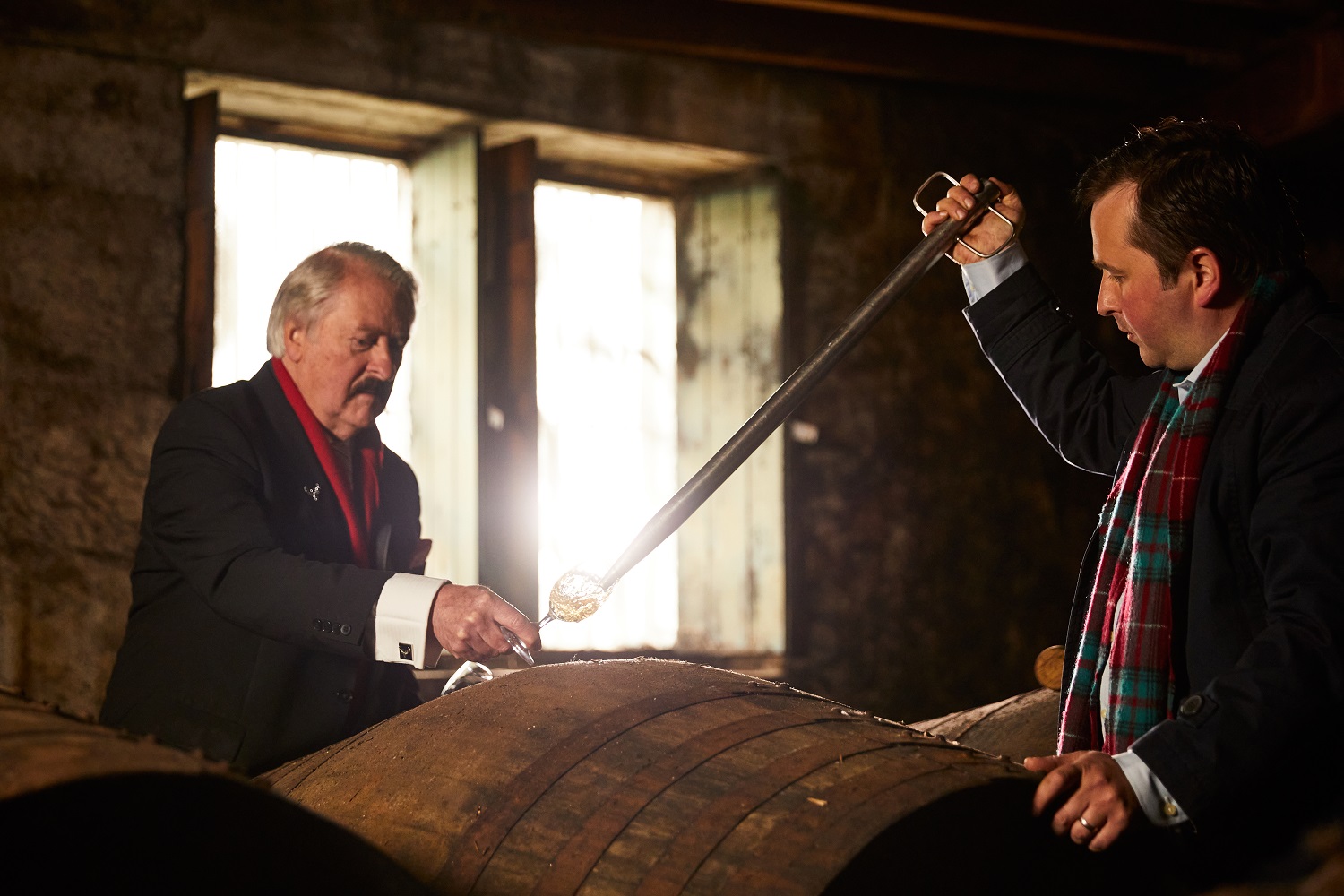
Richard Paterson, his iconic video, and its unexpected rise on TikTok.
We end on perhaps the most iconic sequence in whisky-video lore: a clip filmed in the late 2000s, uploaded to YouTube, and recently gone viral again on TikTok. Richard Paterson, in full theatrical form, rinses his glass with whisky and throws it to the floor before plunging his nose into the glass to demonstrate how whisky should be approached —an unconventional method to some, but unmistakably his.
”Someone called me and said, ‘You’re on TikTok.’ I couldn’t believe it!” The theatricality, he tells me, was meant to capture the audience’s attention and clearly it worked. Behind the humour, though, lies genuine technique; it is still how he recommends people explore whisky today. Perhaps that is why the video continues to resonate. After all, that was my initial question: why he thinks a video filmed in the early days of social media struck such a chord with young people navigating today’s digital world. Thirty-six million views seem to answer that question well. Not bad for a man who has spent nearly sixty years living and breathing this industry. I can only wish him many more.
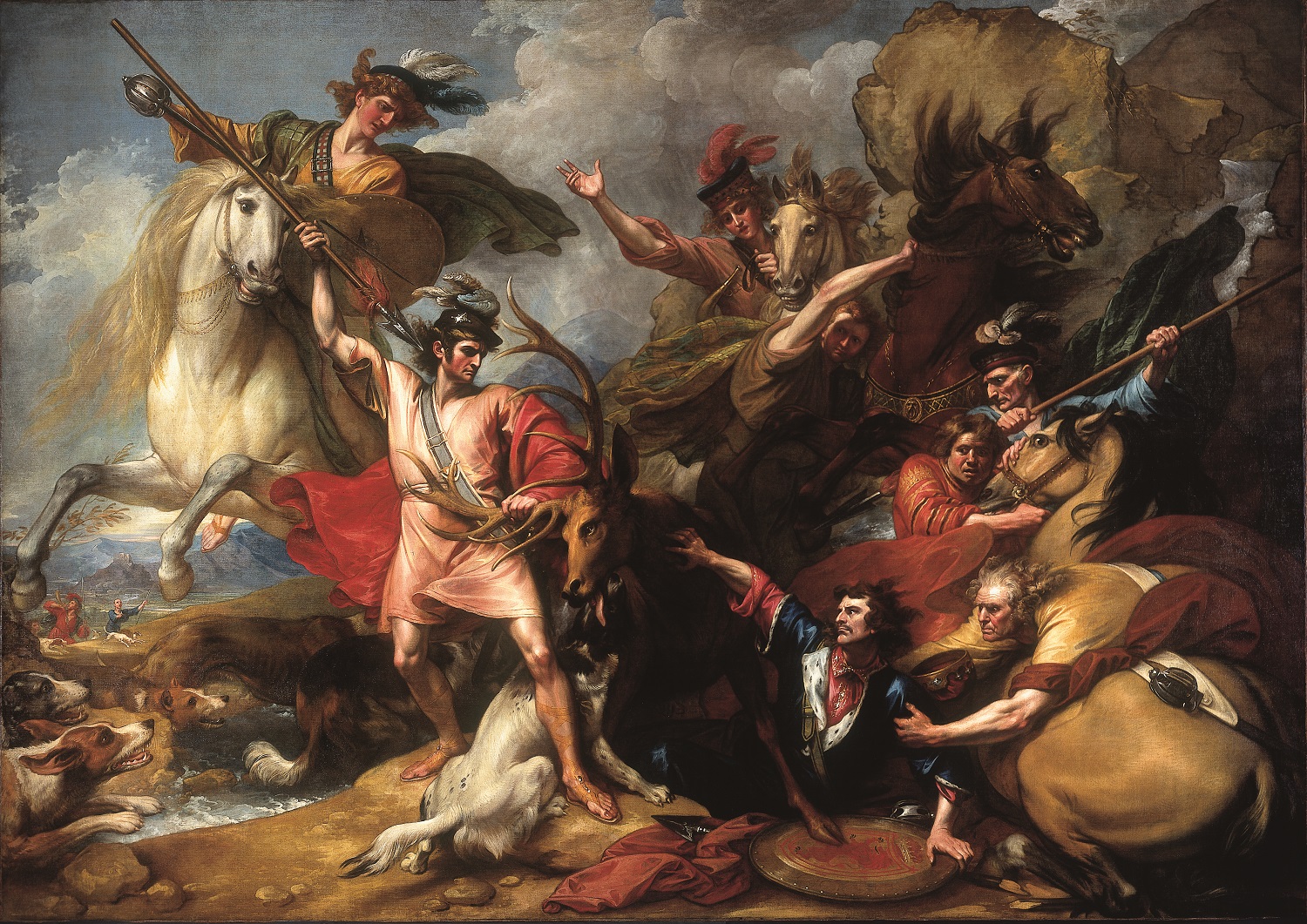
Fury of the Stag
*The Fury of the Stag refers to the legend behind The Dalmore’s emblem: the twelve-pointed stag. According to the story, when King Alexander III of Scotland was attacked by a stag during a hunt, Colin Fitzgerald, chief of the Mackenzie clan, struck it down with his spear and saved the king’s life. The scene was later immortalised in an 1786 painting by Benjamin West, now housed in the National Gallery of Scotland in Edinburgh.