An exclusive interview for Bitterbooze.com with the man who held the reins of the Savoy’s American Bar for almost two decades.
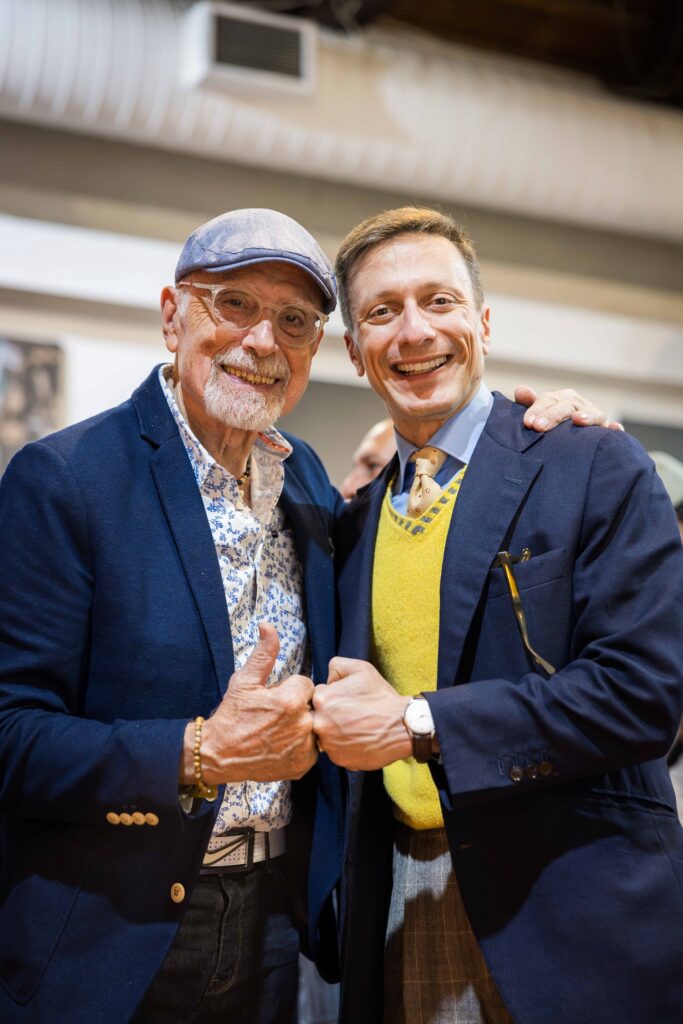
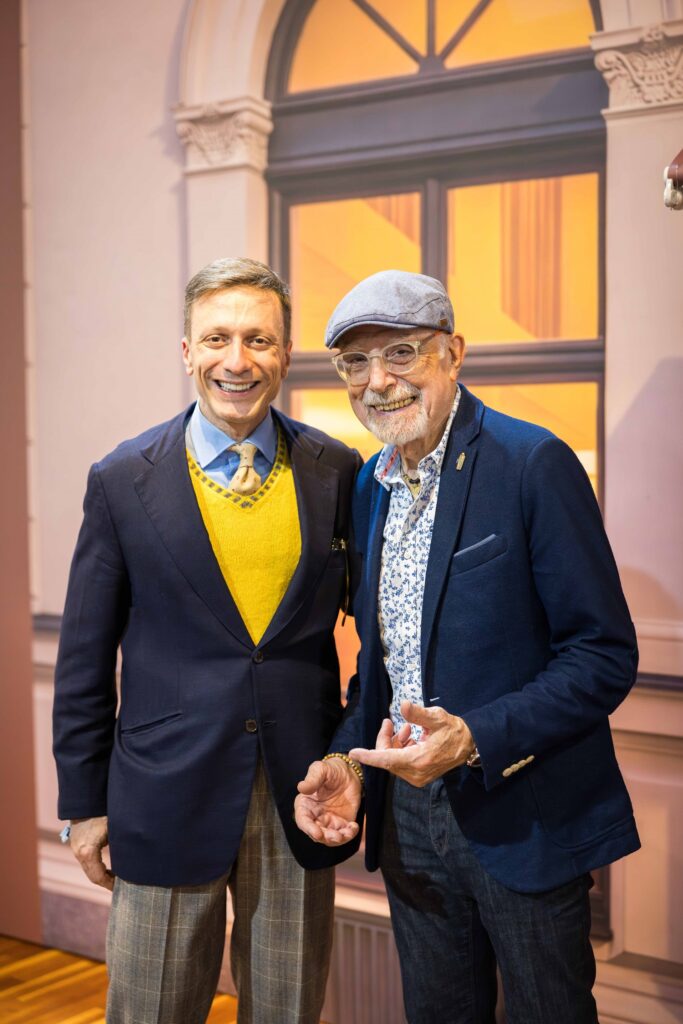
A little before noon, a gentleman in a flat cap, navy blue jacket, white goatee, floral shirt and Converse walked onto the stage of the amphitheatre at Technopolis. A few minutes later he opened his talk, “Longevity: The Secrets to Surviving & Thriving Beyond the Shift”. The subject: how to last a whole lifetime in hospitality without being swallowed up by the late nights and the excess. Sharing the stage with him was Kenji Jesse. The gentleman in the flat cap was Peter Dorelli. And if anyone has earned the right to talk about endurance in this profession, it is him: he has been standing behind bars since the distant year of 1958!
Their talk ranged from practical advice for the daily life of people working in the industry (buying the right shoes, taking regular breaks from drinking during the year, training with clear goals and so on) to the importance of mental health. Among much else, Peter Dorelli, at 86, showed photographs of himself doing yoga and qigong, swimming and having fun like a teenager. The results are plain to see in his health, his looks and his stamina.
After the seminar we sat down together for a chat. The conversation kept slipping away from my questions, the way conversations do with people who have more stories than the mind or the clock can hold, and certainly more than can fit in a single article. Either way, I didn’t manage to ask him everything I had planned. The interview is exclusive to a Greek publication, with one of the living legends of the bar community, a man who, always with a wink, likes to call himself the last of the dinosaurs.
From Rome, with no return ticket
Giampiero Dorelli was born in Rome in 1940, into a family of bankers. His father and uncle had him lined up for the family business and sent him off to train as an accountant. Young Giampiero, however, had one plan and one plan only: to get out. He wrote to his uncle in London, more or less begging him to come and rescue him before he went under. And his uncle came.
By his own account, there were three reasons for leaving. He didn’t want to follow in his father’s footsteps. He didn’t want anyone putting a gun in his hands for 18 months of military service. And… the girls.
In 1958, aged 18, he arrived in England on a one-year work visa. His first job was at an accountancy firm in Knightsbridge, work which, as he once put it publicly, required “a slice of brain I didn’t possess”. A string of odd jobs followed: washer-upper, boilerman, and general dogsbody at a hotel in Cornwall.
At some point the visa ran out, but Dorelli wasn’t deterred; he had made up his mind to stay in London. For roughly four and a half years he was technically illegal, working wherever he could, sometimes behind a bar. The permanent fix came from an army colonel in London, in whose home he worked as a domestic: cooking, ironing and, now and then, mixing a drink at his employer’s parties. The colonel asked him what a bright lad was doing in a job like that, heard the story of the visa, and the next day the two of them went to the immigration office together.
The Pebble Bar years
In 1963, his papers finally in order, he was hired as a sommelier at Stones Chop House in Soho, a very English restaurant owned by the Savoy group. Above the restaurant, he and his brother opened the Pebble Bar. For a while people called them “Mike and Ike”. His brother soon left to become a photographer, but Peter stayed on as head bartender until 1981, and he has described that period as the best time of his life. The place was also just around the corner from Wardour Street, the heart of the British film industry, so anyone who was anyone passed through sooner or later. In 1965 he married Kay, who is still by his side.
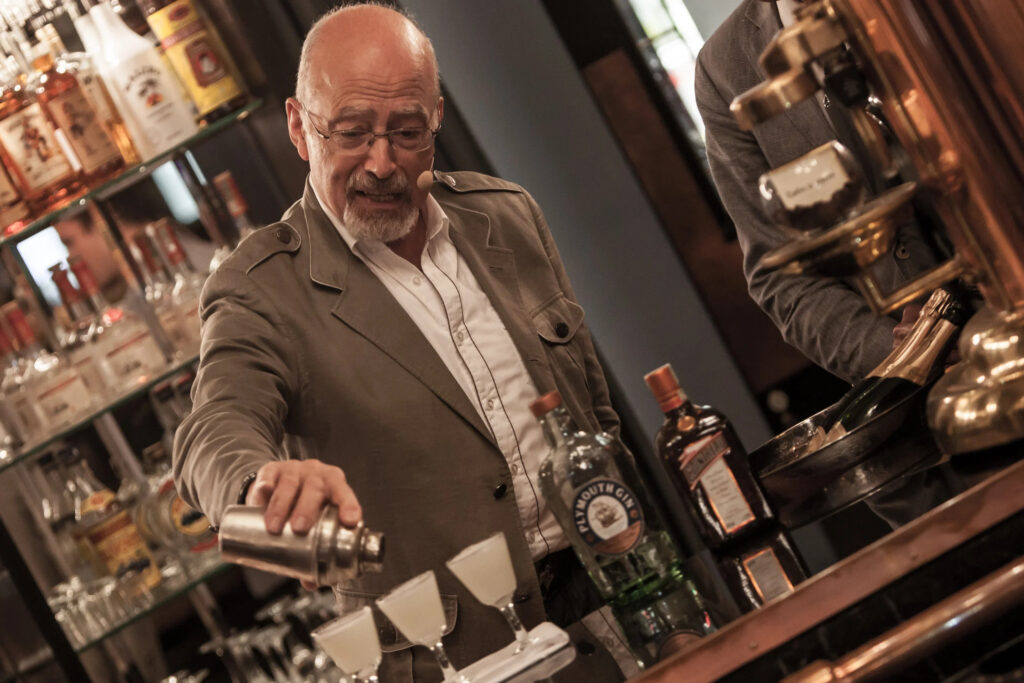
From those years comes one of his first cocktails, the Stone’s Martini of 1969: a Martini with Ricard, a tribute to the restaurant that was his home. He would make it again the day after our conversation, at a special evening with Salvatore Calabrese at the bar of the Hotel Grande Bretagne, as part of Athens Bar Show 2026.
When he joined the Savoy group, the American Bar was ruled by the legendary Joe Gilmore, whom Dorelli considers his master. I asked whether he learned something from him that you won’t find in any book, and Dorelli’s answer came straight back, without a second thought: “Bury your ego and be altruistic.”
In those early years it was also from Gilmore that he learned the importance of body language: “He said to me you should know already by looking at the person what he’s going to ask you, what is, what you’re supposed to be doing for him.”
American Bar: king of the classics
When the group sold the restaurant, Dorelli was expecting his redundancy payment. Instead, he was offered a job at the American Bar of the Savoy itself. He joined in 1981 as assistant head bartender and a few years later became head bartender and bar manager. He stayed until 2003, an impressive run of 22 years, retiring at 63 with 40 years in the group behind him. He was succeeded by his deputy, Salim Khoury.
The line of head bartenders at the American Bar is perhaps the most illustrious family tree in the profession, and I have written about it more than once: Frank Wells, Ada Coleman, Harry Craddock, Eddie Clarke, Reginald Johnson, Joe Gilmore, Harry Viccars and Victor Gower. Dorelli was ninth in line. He also kept up the tradition of the bar creating a cocktail for every important occasion. When I mentioned dozens of creations, he corrected me: “Hundreds.”
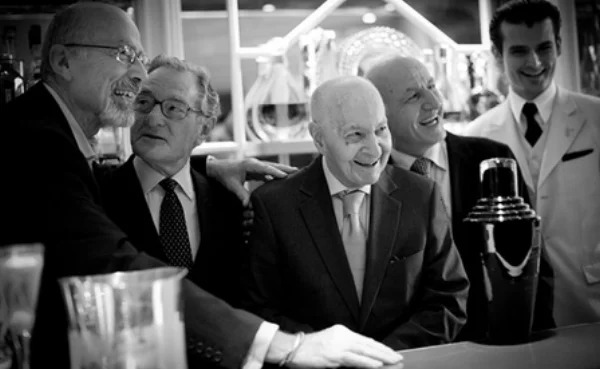
The best known is the Millennium Cocktail, with which the Savoy welcomed the new millennium and which made it into the updated edition of The Savoy Cocktail Book. Elise, named after his daughter, won him the MSS Europa competition in 1994. Each of his grandchildren, he told me, now has a cocktail of their own.
He was famous for his Martinis, always stirred. The only time he personally shook a Martini (until then, if anyone asked for one shaken, he had another bartender do it) was for Dudley Moore, who agreed to play the piano in the bar on that condition alone. As head bartender he also had his bartenders work the floor as waiters, so that the knowledge of the drinks would reach the room as well. And every morning came his free pour test: whoever poured exactly 50ml, without a jigger, got a place behind the bar.
Alongside all this, from 1997 to 2004 he served as president of the renowned United Kingdom Bartenders’ Guild, possibly the oldest bartenders’ association still active anywhere in the world. In 2003 he was honoured for his contribution at the Bar Awards run by Class magazine, and the following year as Industry Personality at the Flavour Bar Awards. For those of us who follow him, and perhaps know him personally, it is easy to see that he never took his retirement seriously. Instead of moving to the English countryside for golf and country walks, he remains in the bar industry body and soul: judging competitions, giving seminars and talks all over the world, guesting at countless bars, and having been one of the driving forces behind the revival of the UKBG, where he is International Ambassador.
“Do not disturb me, I’m creating”
My first question was whether, over so many decades, the way people see the bartending profession has changed. He sets out the context of the time he started: two separate worlds, hotel bars and pubs. Behind the bars of both stood Italians, Germans, French, Spanish; not yet Greeks, as today, and very few, almost no, British. “The British people are quite reserved. They’re not very comfortable with people, they’re not, they’re not extrovert like the Italian…”
The turning point, as he remembers it, he credits to the late, legendary Dick Bradsell, somewhere in the mid-nineties. More precisely, he credits him with the label “mixologist” and the self-image that came with it: “I’m not a bartender, I’m a mixologist… I’m here to make drink, create a drink… never mind about the people.” The word itself is, of course, much older. It was born as a joke in an American newspaper in 1856, and Dale DeGroff brought it back into fashion in 1980s New York. What Dorelli describes is its arrival in London as a title and an attitude.
Within a year, he tells me, there was “a tsunami of English youngsters” wanting to do this job. With them came the investment money. People like Jonathan Downey, a City lawyer who in 1997 opened Match EC1 with Bradsell behind the bar, saw the new vibe and invested. Bars, as you can imagine, sprang up like mushrooms.
What this began to look like in practice, he experienced first-hand, at a bar he would not name. A bartender was making a Mojito, a drink he must have made hundreds of times. The customer asked, with genuine interest, what exactly he was doing. “Do not disturb me, I’m creating.” All these years later, Dorelli still can’t get over it.
Then came what he calls the second golden age, with molecular mixology and “scientists in our midst”. And then the pandemic, which, according to Dorelli, brought that era to a close. “We are ending the mixologies and now back to bartenders.” The problem, of course, is that this return to hospitality no longer draws young people, neither in Britain nor in Greece, where venues are desperately looking for staff. In my view, it may simply no longer suit them, or the pace of the times, since hospitality calls for generosity, patience, a little savoir-faire and a different way of looking at the drink itself. Dorelli puts it like this:
“The cocktail is only a means to deliver… the cocktail becomes a way to communicate… speed up the friendship with the customer, because now we have a very little time to, to get the friend, make friends to the customer so they come back again… you’re now using the cocktail as a means to communicate, to please him, to entertain him.”
As long as we drink coffee, we’ll drink alcohol
For months now I have been asking every professional I talk to about falling consumption in the US and Europe, about British pubs closing, global inflation, and the new, healthy lifestyle that runs counter to bar culture, and I did the same with Peter Dorelli. More precisely, I wondered: are we living through the last decades of alcoholic drinks?
Before I had even put the question, though, he had already come at the subject from the side of the wallet. Financial pressure, he explains, has kept the classics, with little juice and plenty of alcohol, in the spotlight. “If you are going to the place and they charge me 25 pounds for a cocktail, I don’t want juices. Because I can afford, can only afford maybe one or maximum two. So I have to have the most beneficial, we say the alcohol, because that’s what I come for.” But he sees this as temporary. The real trend, he says, is towards less alcohol, and you can see it in the explosive growth of non-alcoholic spirits. “So that tells you something, isn’t it?” As soon as things are better, “those heavy cocktails” will be gone.
On the question of the end of alcohol he was categorical: “No, no, it will never happen.” We live, he explains, in a world that adores coffee and honours it at every opportunity. Caffeine stimulates you; it makes you more critical, more dissatisfied, more aggressive. Something has to bring you down. “And what is the best, what the best, uh, medicine, shall we say, to condition to, to caffeine? Alcohol.” Once upon a time, he adds, there was opium too. Today alcohol is left to do the job alone. As long as we demand speed, we will demand something to help us relax.
So he doesn’t believe people are giving up drinking, but that they are drinking lighter. What is suffering are the spirits at 43, 45 and 50 percent, the cask strengths. His own advice to younger people is to invest in whatever sits around 16 to 25 percent: vermouth, Madeira, sherry, the wine-based drinks. He points to Japan, too, where with sake, “just a little stronger than wine”, you can produce “a wonderful cocktail”.
The caffeine theory undeniably has its charm, but the numbers tell a more complicated story. The big polling picture shows that young adults drink considerably less than they did twenty years ago, and the main reason they give is health, not prices. On the other hand, the latest IWSR data shows Gen Z coming back, with the share of young Britons who had a drink in the previous six months rising from 66% in 2023 to 79% in autumn 2025. What remains constant across all ages, though, is moderation. People drink less often, and when they do drink, they drink less.
He, at any rate, answers with the calm of someone who has seen it all before: how many crises, how many ups and downs has he lived through? “We’ll come out of it like we always did… with a few scars, a few bruises, but we come out of it like we always do it.”
A drink for every hour of the day
I asked him how he would describe the flavours he loves. His answer was that the question, as everyone asks it, is the wrong one. “People ask me, what’s your favourite drink? … It depends on what time you’re asking me.” Our metabolism, he explains, changes through the day, and our glass should follow it.
In the morning the body is “just like a baby” and needs help waking up, so a Corpse Reviver, a Bloody Mary or a Bloody Caesar fit the bill. Before a meal, an aperitif, which in his vocabulary means a Martini, a Negroni, an Americano, even a Fernet-Branca. “The aperitif means open your stomach to receive food.” After the meal, with the grease and the spices still in your mouth, something refreshing but not light, mint with chocolate, say. And the last one of the night, on the occasions he drinks, because, as he points out, he doesn’t drink all the time: something full-bodied, slightly sweet, “with a bit of viscosity”, so that it stays in the mouth longer. A cognac, or lately Auchentoshan Three Wood, the triple-distilled Lowland single malt finished in Oloroso and PX casks.
He spoke about his own creations like a musician. He recalled Glenn Miller, who, as he tells it, carried the sound he wanted around in his head for years, until one night a musician was missing from the band and suddenly there it was, the sound he had been looking for. He works the same way. He closes his eyes, thinks about the occasion, and the taste arrives in his mouth before it reaches the glass. A young, trendy customer? Something light and “jovial, fresh, refreshing, possibly with a bit of bubbly”. A businesswoman? Something strong, “because the business is a hard thing”: a Martini, an Old Fashioned, gin, whisky. Someone who likes to show off? Tequila, because “it’s also sexy, tequila”. The cocktail is made for the person who will drink it.
The name lives on
I asked whether creating cocktails is a bartender’s way of leaving something behind, of building a legacy. “Yes, of course,” he replies, and gives as an example his friend Salvatore Calabrese and his Breakfast Martini, which was to be served in Athens the following evening, from half past eight until ten. “For God’s sake, what are you doing at 10 o’clock at night?” he quipped with a smile. The Breakfast Martini, he says, is essentially “a White Lady with a good marmalade, for God’s sake”, something Calabrese isn’t exactly thrilled to hear. Beneath the teasing, though, lay a serious point. What keeps a cocktail alive is its name and the story it carries, more than the recipe. “It’s a storytelling, it’s a storytelling. That’s what it is.”
Some years ago, in an interview, he said that his ashes would go in a shaker-shaped urn and end up in the Dorelli family tomb in Italy. “Until then I’m a bartender: I will die as a bartender.” At the Athens Bar Show seminar, the talk was about how to last a whole career behind the bar. After 68 years, his own answer fits inside the advice Joe Gilmore once gave him: bury your ego and look at the person in front of you.