When talking about sustainability in bars, the focus almost always lands on what is being purchased and how it’s used. Much less attention is paid to when it’s purchased, and how often. Yet frequency can sometimes have a bigger footprint than the product itself. This final piece in the sustainability series looks at exactly that. At Lost + Found Drinkery, this realization led to a structural shift in logistics through bulk ordering.
At some point, the team decided to rationalize their procurement system by changing the rhythm of their orders. Instead of placing small, repeated orders throughout the month, they moved toward larger quantities at longer intervals. The pressure shifted from frequency to storage capacity and proper planning.
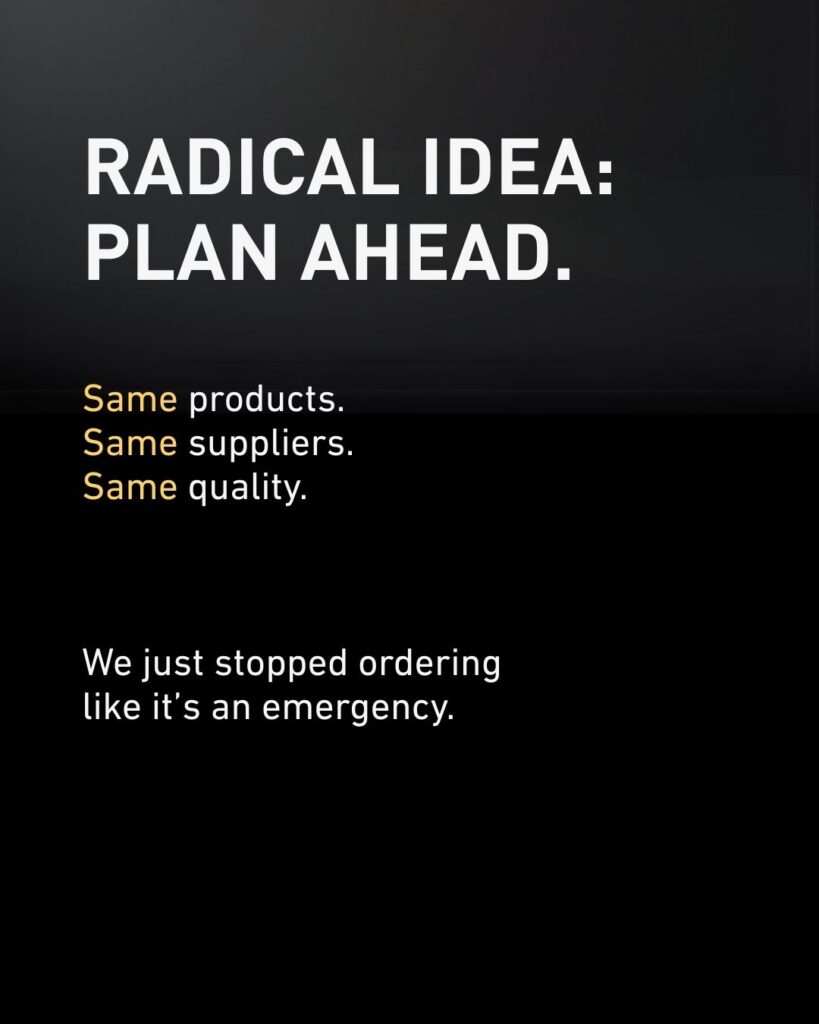
This was only possible because of the space. Lost + Found operates with substantial back-of-house areas, sufficient refrigeration, and real stock capacity. That allows them to store beers, soft drinks, fruit, glassware, and dry goods without depending on constant mid-month deliveries interrupting service.
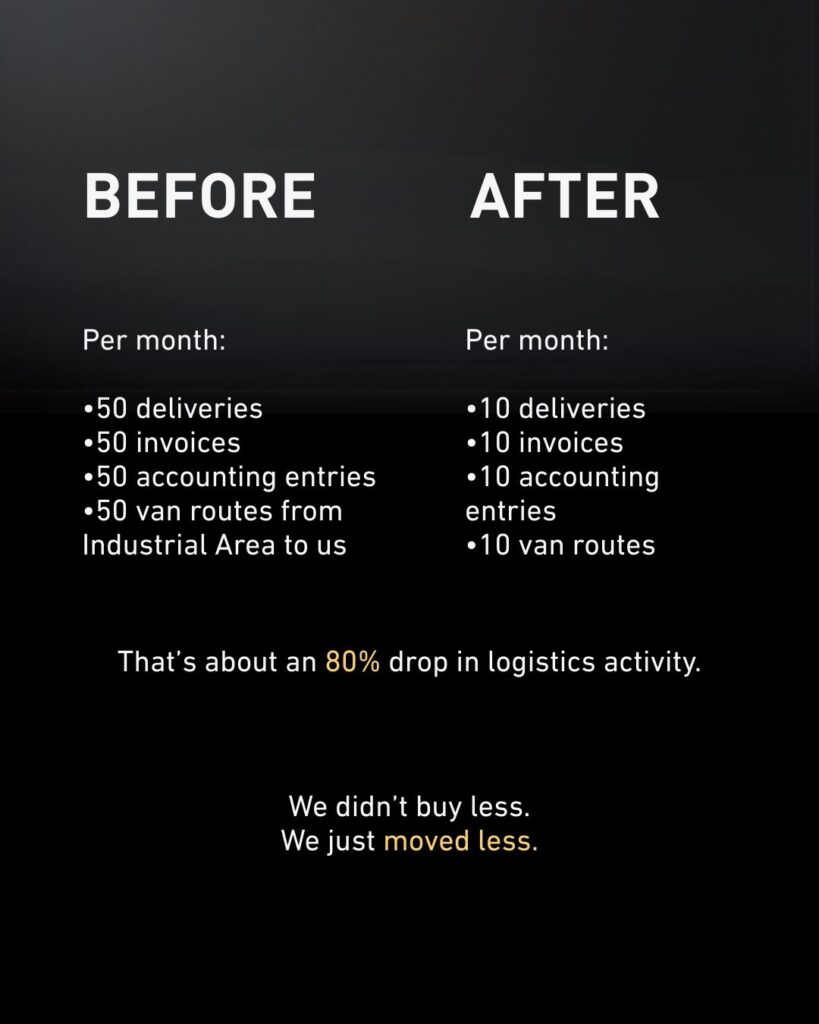
Before the shift to bulk ordering, deliveries were weekly and frequent. Around fifty unloadings per month, along with the corresponding invoices and accounting entries. Vans were constantly driving from the warehouse area outside Nicosia to Lordou Vyronos, where the bar is located. With the new system in place, deliveries dropped dramatically. Fewer trips, less paperwork, fewer interruptions during the day.
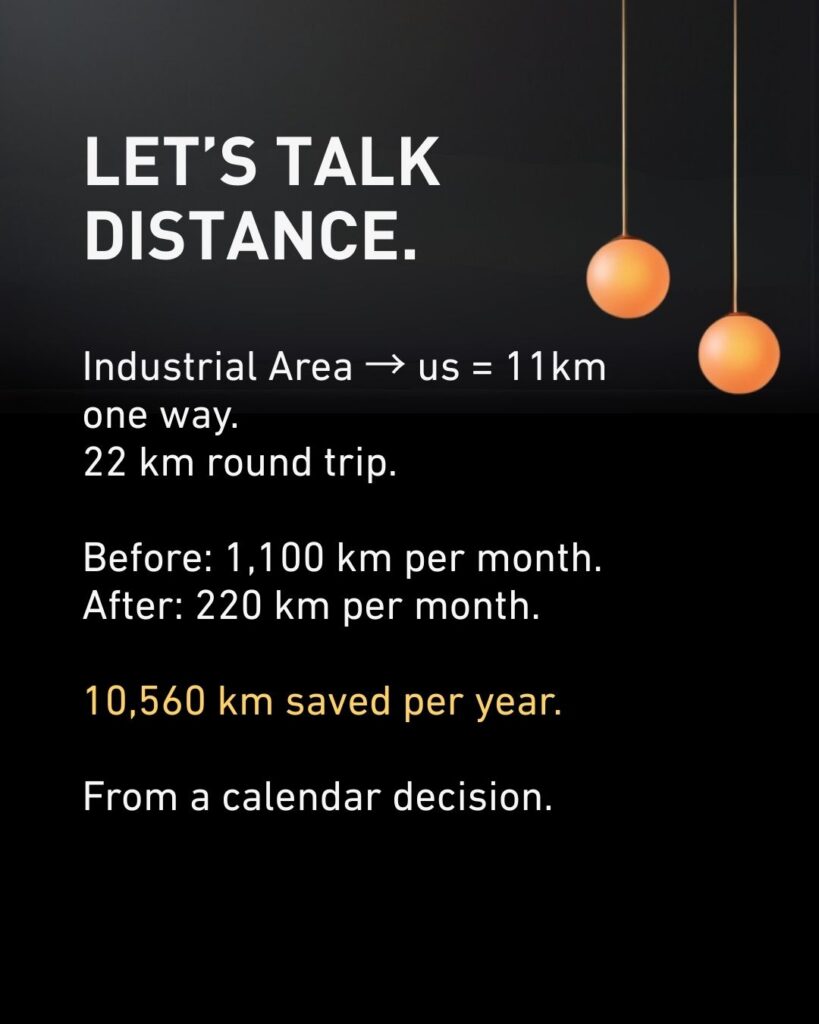
The difference becomes clearer in numbers. The distance from the industrial warehouse area to the bar is roughly 11 kilometers one way. A round trip makes that 22 kilometers. Previously, about fifty trips per month meant 1,100 kilometers. After the shift, that number dropped to around 220 kilometers. Over a year, that’s more than 10,000 kilometers less on the city’s roads.
With average emissions of about 0.27 kg of CO₂ per kilometer for an urban delivery van, this reduction translates to roughly 2.8 tons of CO₂ avoided annually. Without changing the product. Without changing the supplier. Without changing quality.
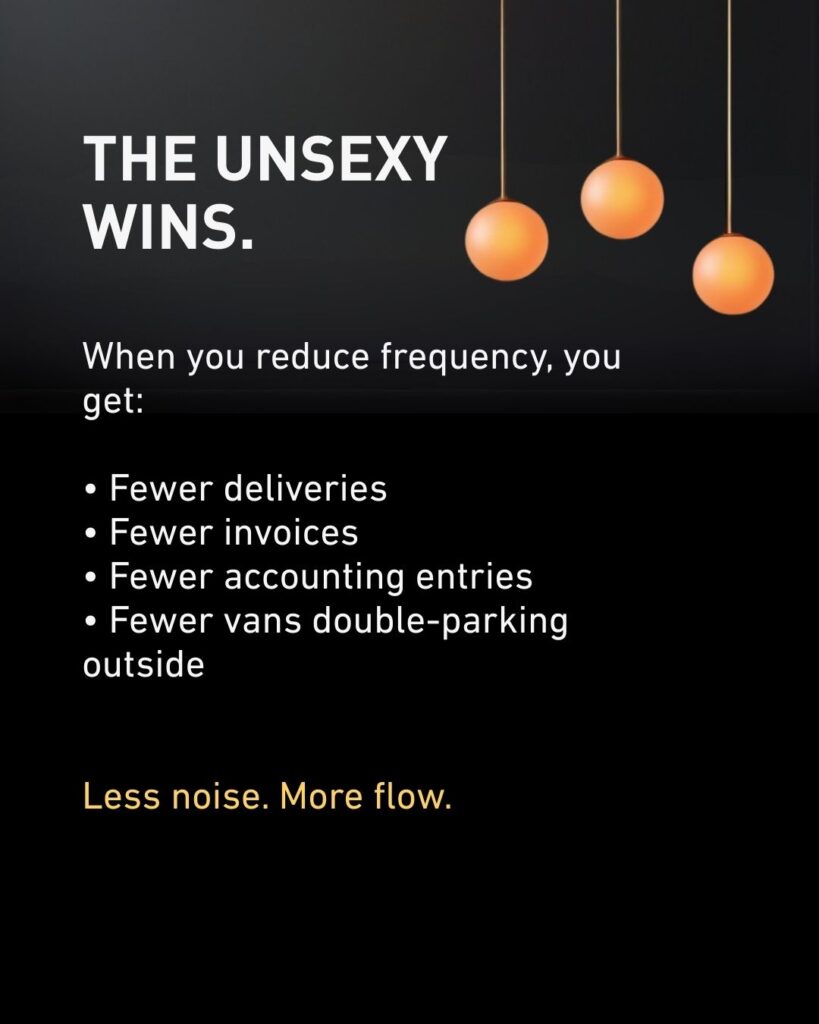
The real shift is from constant replenishment to organized sufficiency. Fewer deliveries mean fewer service interruptions, less administrative handling, less paperwork, and fewer vehicles circulating across the city for the exact same volume of goods.
It’s also worth noting that bulk ordering is perhaps the only practice applied at Lost + Found that does not generate immediate financial savings. In fact, it requires a small upfront commitment, since supplies are essentially prepaid for future use. The benefit extends beyond the bar itself. It reduces traffic, lowers emissions, and eases pressure on suppliers and the wider urban ecosystem.
Weekly consolidated ordering is already in place. The next step, where feasible, is transitioning to a monthly cycle. The principle remains the same: what is purchased doesn’t change. When and how it arrives does.
Bulk ordering at Lost + Found is an organizational decision. And it demonstrates that efficiency often depends less on what you do, and more on how often you do it.