Water in bars, in businesses of any kind, even in our homes, tends to be invisible. It sits behind the ice, behind the filters, behind the toilet tanks, behind the plants. No one really thinks about it unless it’s gone. In a high-traffic venue, though, water consumption is neither minor nor neutral. I touched on this in a previous piece about water use in the restroom. Here, I’m looking at another practice at Lost + Found Drinkery that also revolves around water —not as saving, but as shifting flow. That’s Water Recovery System.
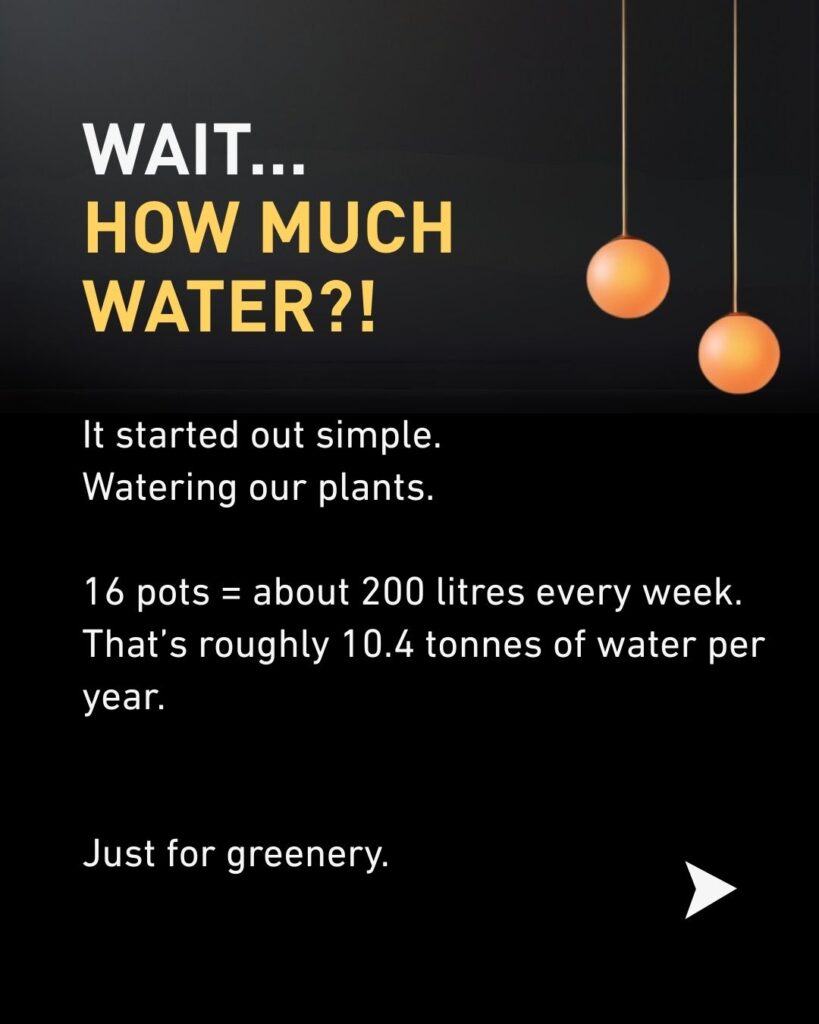
This didn’t start with an environmental campaign. It started with a simple observation: how much water are we actually using for something as “harmless” as watering plants? Sixteen pots. Roughly 200 liters per week. Around 10,400 liters per year. That’s 10.4 cubic meters of potable water, just to keep the space green. And that doesn’t even include water used for cleaning outdoor surfaces.
No, they didn’t decide to get rid of the plants. The real question was different: why use drinking water for tasks that don’t require drinking water?
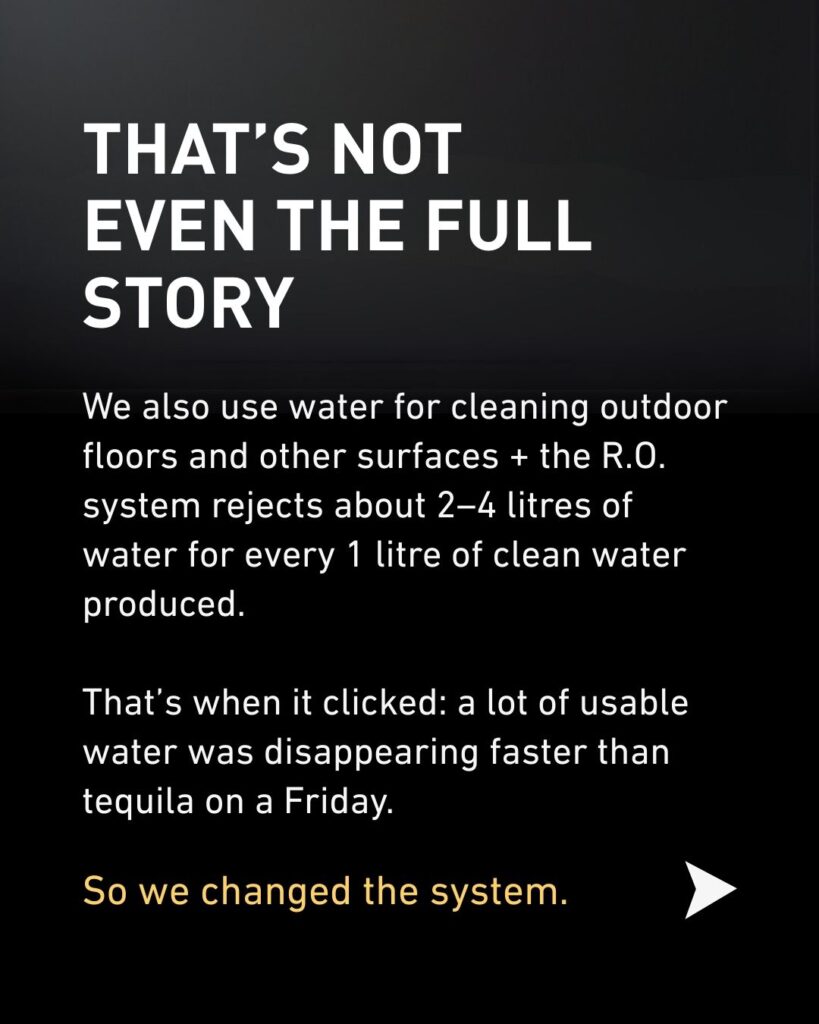
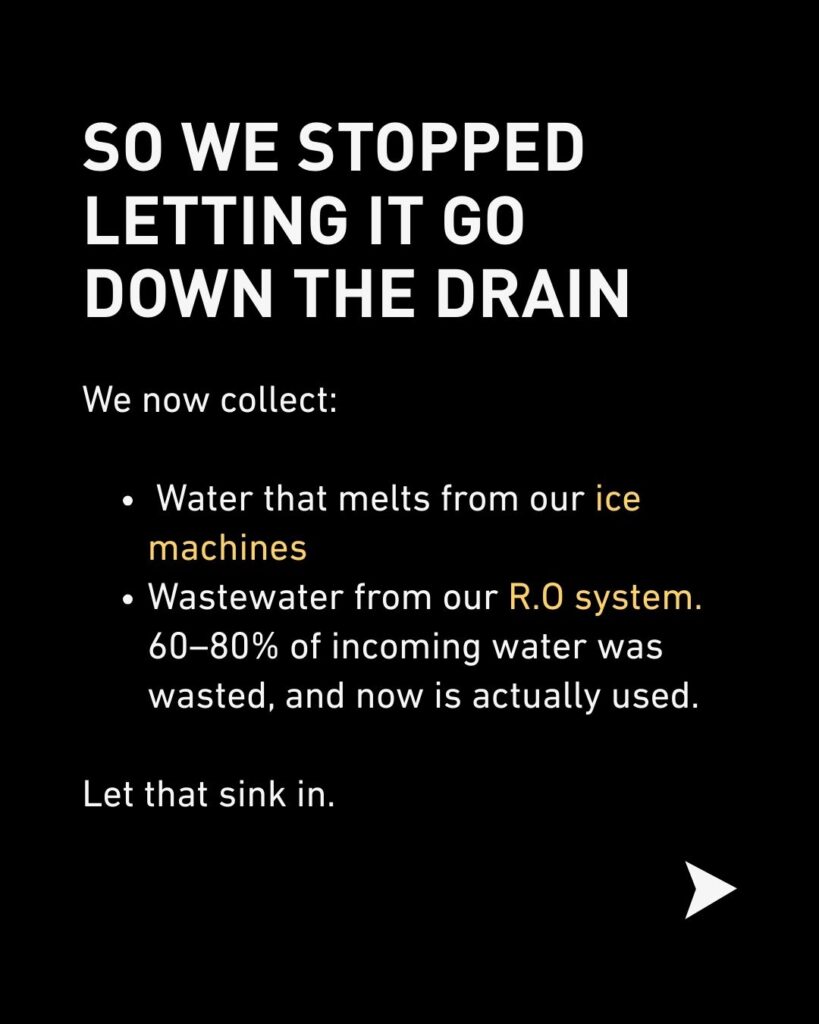
At the same time, in the very same building, significant amounts of clean water were going straight down the drain. A reverse osmosis system typically rejects two to four liters of water for every one liter of purified water it produces. An ice machine uses about one liter of water per cycle to rinse the evaporator. On a daily basis, that can mean roughly 40 liters. On top of that, about 5–12% of ice production melts inside the bin and drains away.
In other words, filtered, already processed water was being lost.
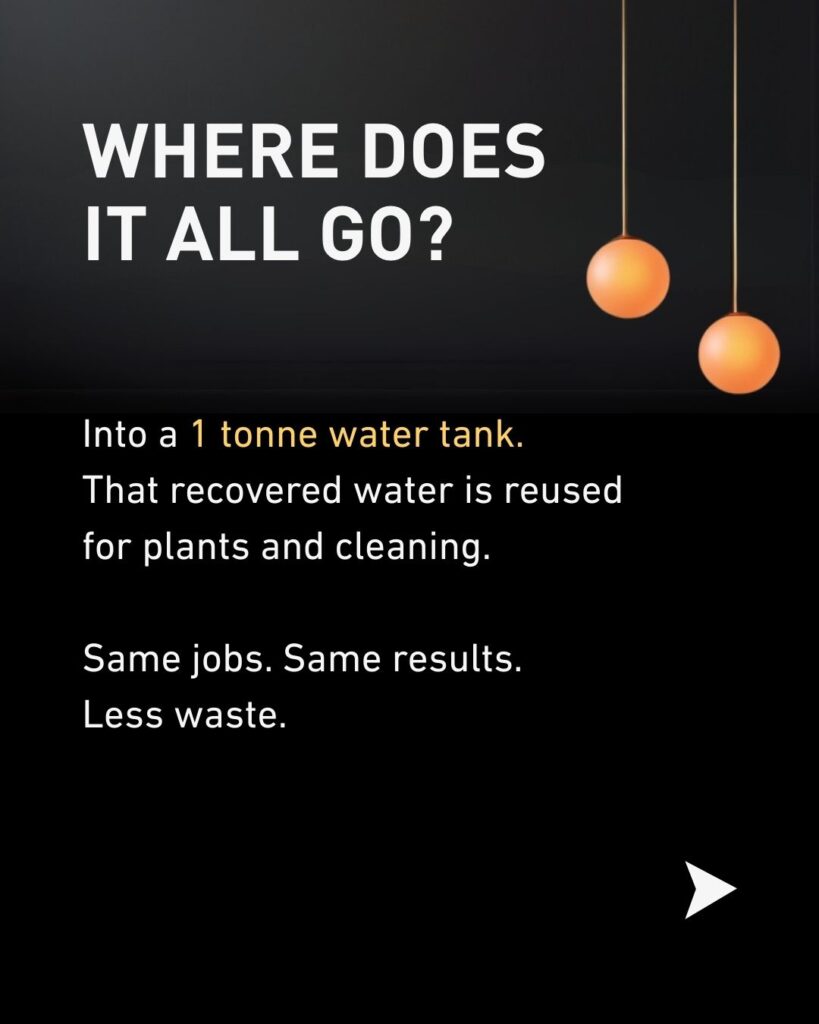
The decision was to treat that flow as a resource, not as waste, creating a whole new Water Recovery System. Drainage water from the ice machines and reject water from the reverse osmosis system will be collected via pump into a one-ton storage tank. From there, it will be used for plant irrigation and outdoor cleaning, replacing the equivalent use of potable water.
The system is currently in the installation phase. But the logic behind it is already clear. This is not “saving” water in the conventional sense. It’s substitution. It’s shifting from consuming newly produced potable water to using water that is already being generated and would otherwise be discarded.
In footprint terms, the annual water use for irrigation alone —about 10.4 m³— corresponds to roughly 3.1 to 6.2 kg of CO₂. When you factor in that you’re avoiding both the production of new potable water and the treatment of the same volume as wastewater, the overall impact effectively doubles. Realistically, that means around 6 to 12 kg of CO₂ per year.
These aren’t dramatic numbers. But they’re based on repetition. On intervening in a background flow that operates every single day, whether anyone notices it or not. And ultimately, it reflects a different way of thinking about inputs and outputs in a bar.
The Water Recovery System at Lost + Found doesn’t change the guest experience. It doesn’t change the drink. It doesn’t photograph well. But it changes the relationship the business has with a fundamental resource. And in places like Cyprus or Greece, where water scarcity is not theoretical, that matters. In the end, sustainability is also about how fully you use each flow — and how intentionally you prevent it from being lost.