Few distilleries are as influential today within the global rum community and among professional producers as Foursquare. The brainchild of Richard Seale, the distillery has a habit of surprising the market from time to time, always in limited quantities and only when it genuinely has something to say. Foursquare Shibboleth is one such release. When it was bottled, it did not simply have a message. According to its creator, what mattered just as much was how that message was delivered. A self-evident statement about identity itself.
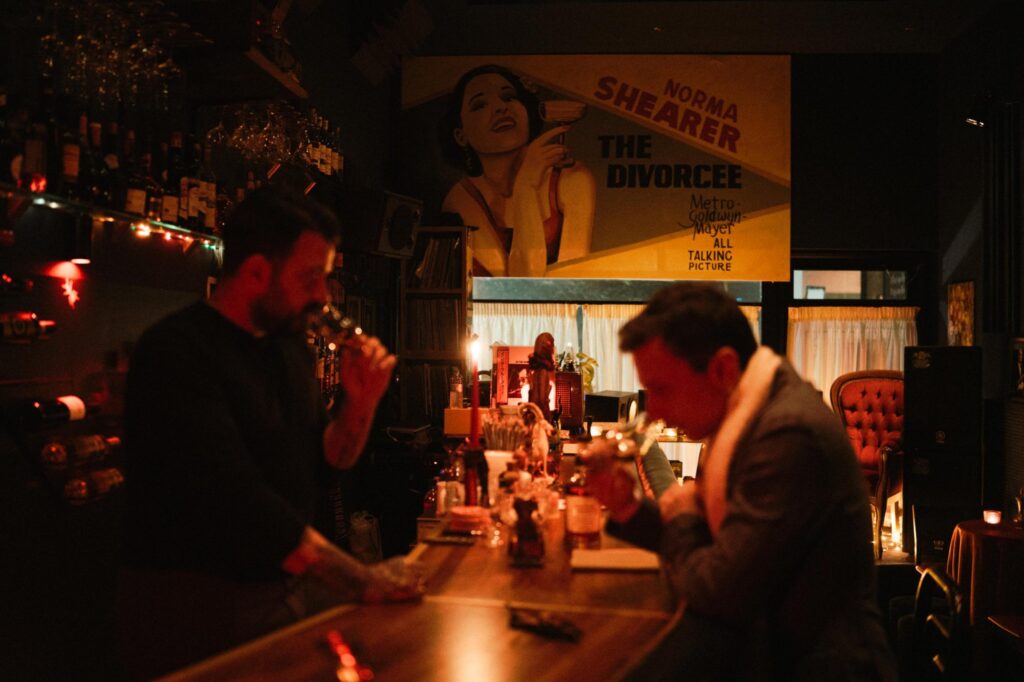
If this sounds confusing, read on. I will break it down step by step. For the record, I tasted this rum one afternoon at my much-loved Finos Audiophile bar, in the company of good friend and barkeeper Vasilis Tsobanidis, whose writing I am fortunate to feature from time to time on Bitterbooze.
The rise of Foursquare felt almost sudden. One day it was deeply embedded in the hearts of many of us, roughly at the same moment we collectively turned our backs on overly commercial, characterless rums. As the years passed, we were gradually initiated into a series of bottlings under the distillery’s Exceptional Cask Selection umbrella. These releases introduced concepts that were, until then, largely foreign to the rum world: vintage statements, unconventional cask ageings, and a whisky-adjacent mindset.
I still vividly remember Zinfandel, released about a decade ago, or Criterion. Both were bottlings often said to speak more to whisky drinkers than to the average rum enthusiast. And although neither was released in what one would strictly call tiny quantities, their value rose rapidly and deservedly so. But let us step back for a moment and revisit the origins of the distillery itself.
The Seale family
As the saying goes, the apple does not fall far from the tree. In the case of Foursquare, the proverb proves accurate. Richard Seale not only followed his family’s path in the rum trade, but took it several steps further. Five generations back, in the 1920s, the Seale family, under Reginald Leon Seale, began actively trading, blending, and bottling spirits from Barbados through the company R. L. Seale & Co. Ltd.
Over time, the company built its reputation, primarily through the acquisition of established brands. Among the most notable were John D. Taylor’s Velvet Falernum and Doorly’s rum. In 1995, Sir David Seale, together with his son Richard, founded Foursquare Distillery. Production relied on a combination of copper pot stills and continuous column stills, aiming to express as faithfully and transparently as possible what they considered the authentic Bajan rum style.
Doorly’s production was transferred there, while Foursquare also began releasing some of the finest rums many of us have tasted over the years, primarily under its own name.
Foursquare and the Exceptional Cask Selection series
The distillery was built on the historic Foursquare sugar plantation in St. Philip, Barbados, on land whose use dates back to around 1640 and which housed a sugar factory and distillery from the 18th century onward. The sugar works were abandoned in the 1980s, before the Seale family acquired the site and converted it into a modern distilling facility. Today, it is one of only four operational distilleries on the island.
It is also worth noting that Richard Seale is the first member of the family to distil spirits himself, creating rums entirely from scratch.
For now, I will leave the broader history of Foursquare and Bajan rum for another, more detailed piece, along with the fascinating and occasionally controversial figure of Richard Seale. Let us return instead to the rum at hand.
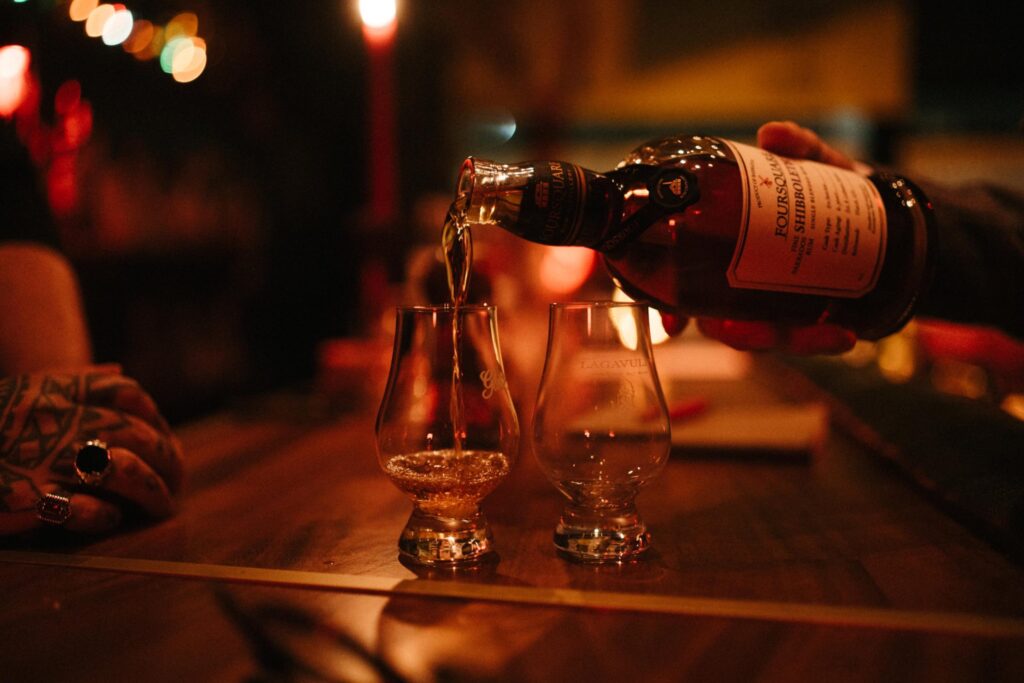
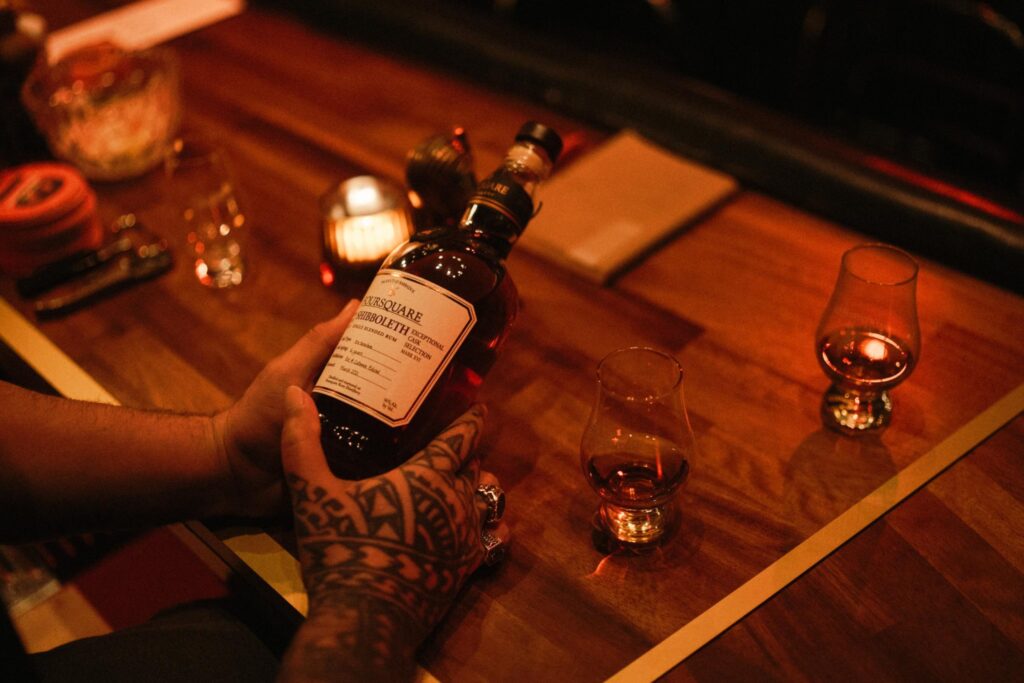
The Exceptional Cask Selection series began in 2008 with the release of the 1998 Vintage, a 10-year-old rum matured in ex-bourbon barrels. Since then, each bottling has been identified either by its vintage year or by a distinctive name, while also receiving an internal Mark number. Thus, the 1998 Vintage became Mark I, and Foursquare Shibboleth, as the sixteenth release in the series, carries the designation Mark XVI.
At this point, allow me a brief detour to unpack the meaning behind the name.
Why Shibboleth?
The term has biblical origins, specifically from the Book of Krites (12:5–6) in the Old Testament. It refers to a word used as a linguistic test of identity. Following a civil conflict between the Gileadites and the Ephraimites, the former controlled the crossings of the Jordan River. Those attempting to cross were asked to pronounce the word “shibboleth,” meaning both “ear of grain” and “flowing water” in Hebrew.
The Ephraimites, due to their dialect, could not properly pronounce the “sh” sound and instead said “sibboleth,” revealing their identity. Pronunciation thus became a criterion for inclusion or exclusion. Over time, the word came to symbolise how subtle linguistic differences can define belonging, acceptance, or rejection.
In modern usage, “shibboleth” carries precisely this meaning. It is a marker of recognition among those who “speak the same language,” literally or metaphorically. It may refer to a word, practice, principle, or stance that distinguishes the initiated from everyone else. Often, it is used critically, to describe ideas repeated as signs of orthodoxy without substantive content. Yet at its core, the idea remains the same. Identity is not declared. It is revealed in how one speaks. This, perhaps, is the concept Richard Seale wished to attach to this particular release.
Foursquare Shibboleth is a classic molasses-based blend of pot still and column still distillates. It was matured for a full 16 years in ex-bourbon barrels, entirely in Barbados. Such long tropical ageing is becoming increasingly rare.
Foursquare Shibboleth in the glass
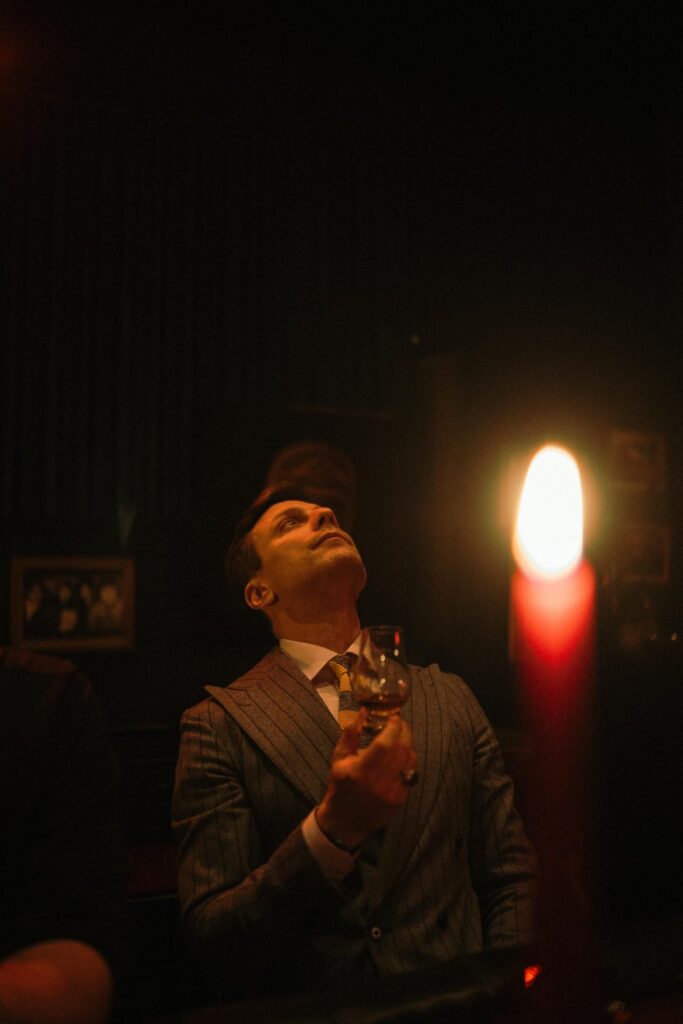
We opened the bottle under the low light of Finos in Agia Paraskevi, the record player spinning Aretha Franklin’s Amazing Grace. The rum was immediately expressive and inviting on the nose. A broad aromatic spectrum unfolded, with dried fruits taking the lead, followed by sweet spices, tobacco, charred wood, and subtle herbal notes that created a layered and complex profile.
Cooked apple, toasted coconut, raisins, natural varnish and grease, alongside well-integrated aromas of chocolate, liquorice, honeycomb, bay leaf, and faint hints of nutmeg and cinnamon, the more expressive types often associated with Indonesia or Ceylon. Genuine vanilla rounded things out.
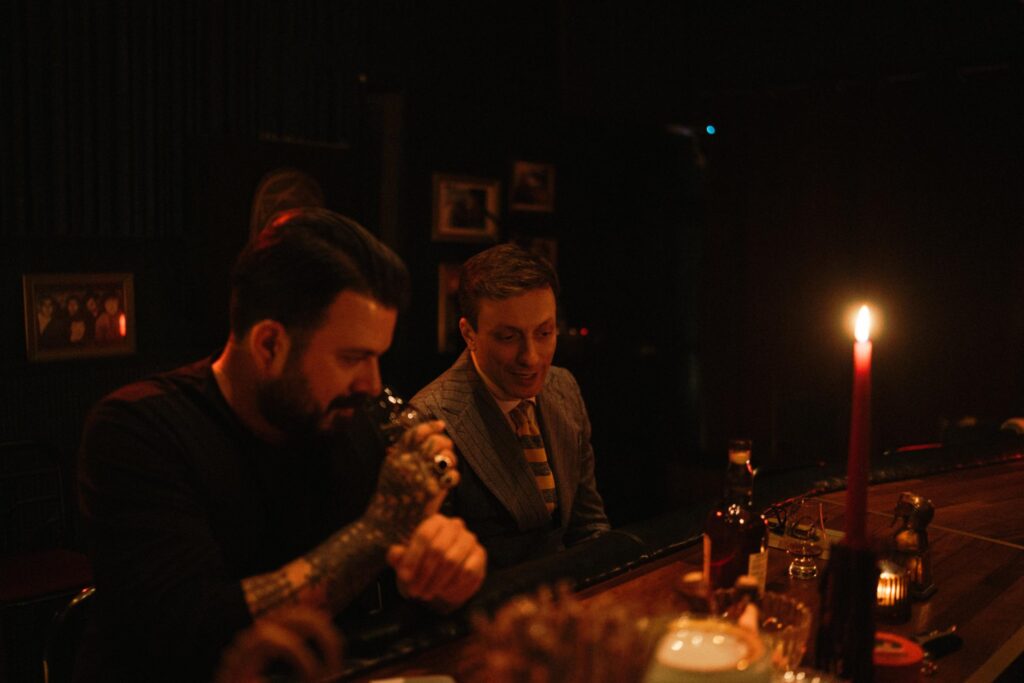
On the palate, and in the complete absence of additives, the rum was strikingly dry, with a medium body, a long and impressive finish, and the tannic grip of bitter chocolate. Unquestionably, this is a rum fit for a masterclass in expressiveness and complexity, as well as a powerful demonstration of what Bajan distillates are capable of. Barbados, after all, is widely regarded as one of the foundational pillars of Caribbean rum.
Foursquare Shibboleth is bottled at 56% ABV, non-chill filtered. In Greece, it is distributed by Tsaknakis Bros., a company that has consistently spoiled us with high-quality rum selections. Released in 2021 and arriving locally roughly a year later, it may now be difficult to find. Only 9,600 bottles were produced worldwide. If you do come across one, do not hesitate.
All photos by Thenia Petsava, exclusively for Bitterbooze.com