Having already set the sustainability conversation where it actually belongs, as a series of decisions judged by their net result, it’s time to move away from theory and into real examples. Each piece in this series focuses on one practice implemented at Lost + Found, looking at what it delivers, what it requires, and what the actual payoff is. The first example is one that’s hard to dismiss as symbolic: solar panels and on-site energy generation.
Lost + Found’s solar system currently produces an average of around 95 kWh per day. On a yearly basis, that adds up to 34,675 kWh, covering roughly 38% of the bar’s total energy needs. Additional panels are already being installed, expected to add another 45% in coverage, with full energy independence as the long-term goal. These aren’t abstract figures. They represent a real shift in how energy is produced and consumed in a modern bar environment.
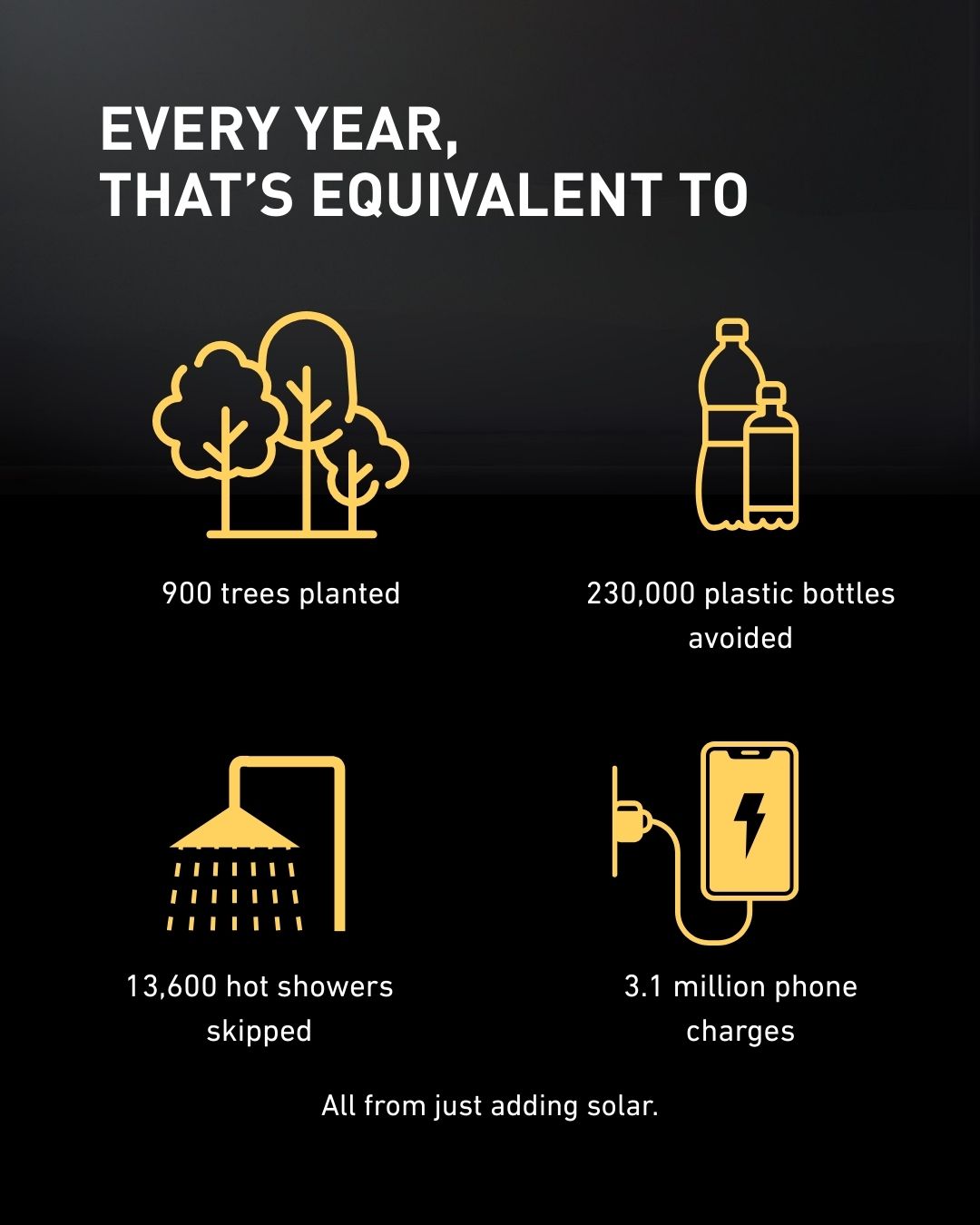
This choice also comes with a clear environmental impact. The energy generated corresponds to approximately 19 tons of CO₂ emissions avoided each year. To put that into more tangible terms, that’s the equivalent of planting around 900 trees annually, avoiding the use of roughly 230,000 plastic bottles, skipping 13,600 hot showers, or charging more than 3.1 million smartphones. These comparisons aren’t meant to dramatize the numbers, but to place them in a scale that’s easier to grasp.
Where this decision becomes particularly interesting, though, is in how it connects back to the business itself. Solar energy reduces dependence on external factors, lowers energy costs, and introduces a level of predictability in an area that has seen major volatility in recent years. In simple terms, it’s a choice that works both for the environment and for the long-term sustainability of the business.
Unlike many practices often discussed in hospitality, solar panels don’t require daily management, additional labor, or extra pressure on the team. They don’t add operational complexity and they don’t compromise the guest experience. Instead, they work quietly in the background, delivering clear benefits without demanding trade-offs elsewhere.
That’s exactly the point of this approach. Not “green” gestures that need constant explanation to hold value, but infrastructure that genuinely changes the balance. Better drinks, a lower footprint, and a business that becomes more resilient over time.
This isn’t an easy solution, and it’s certainly not one that fits everyone. Solar panels involve a significant upfront investment and aren’t feasible in every location. But they clearly show that sustainability only becomes meaningful when it’s tied to real decisions, real investment, and real results. When it stops being a narrative and starts being infrastructure.
Disclaimer: Figures are indicative and based on AI-assisted data analysis using Lost + Found’s internal database.