

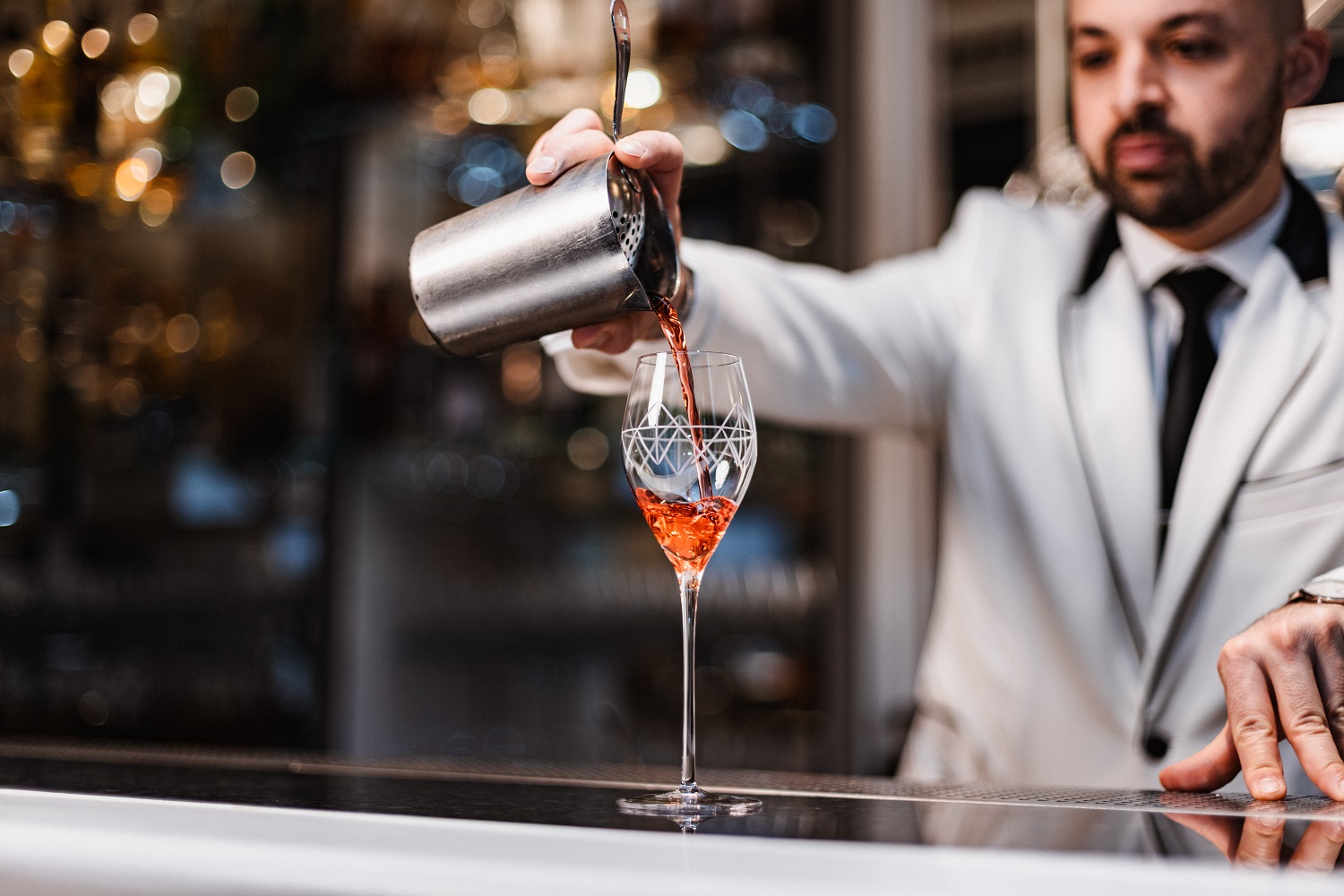
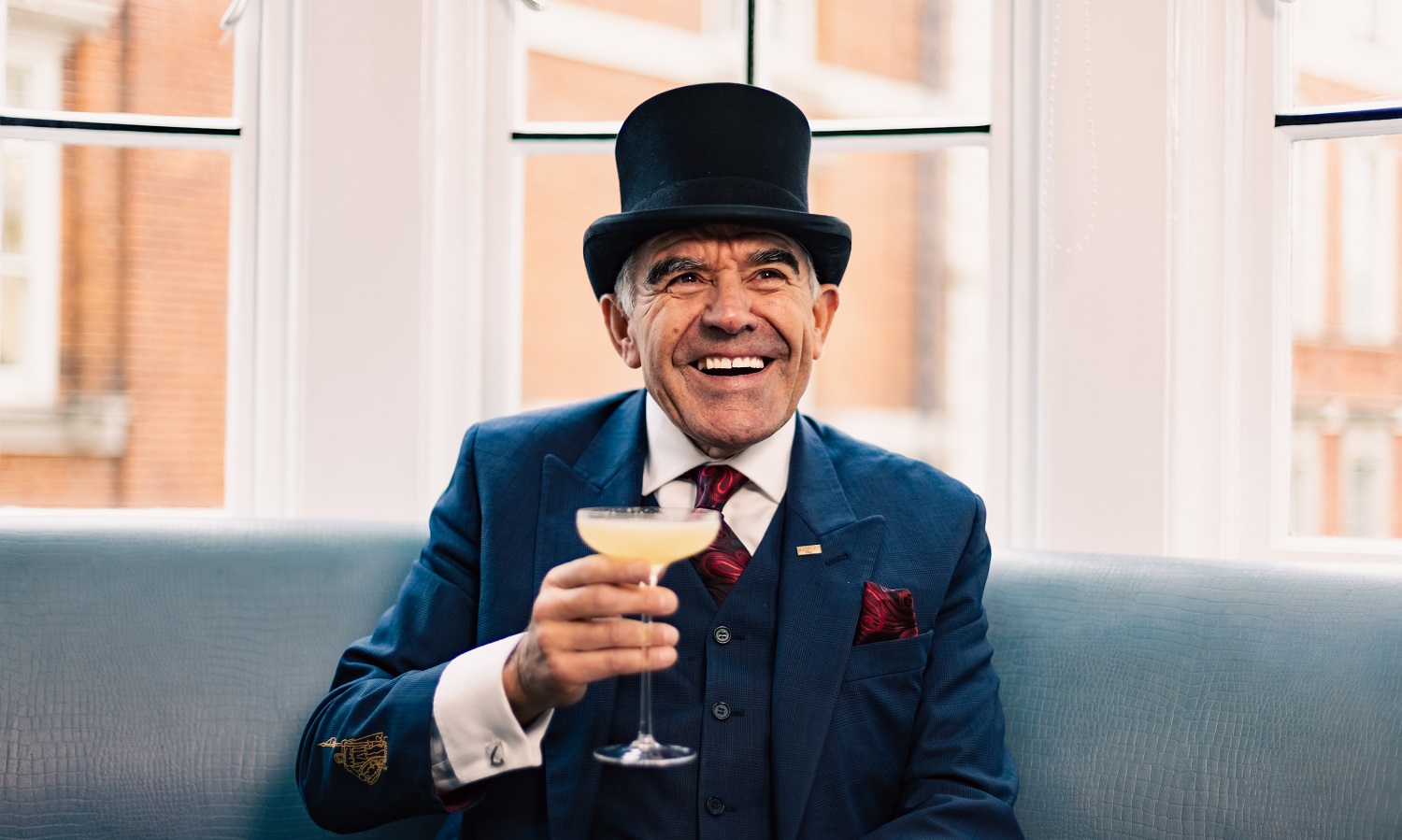
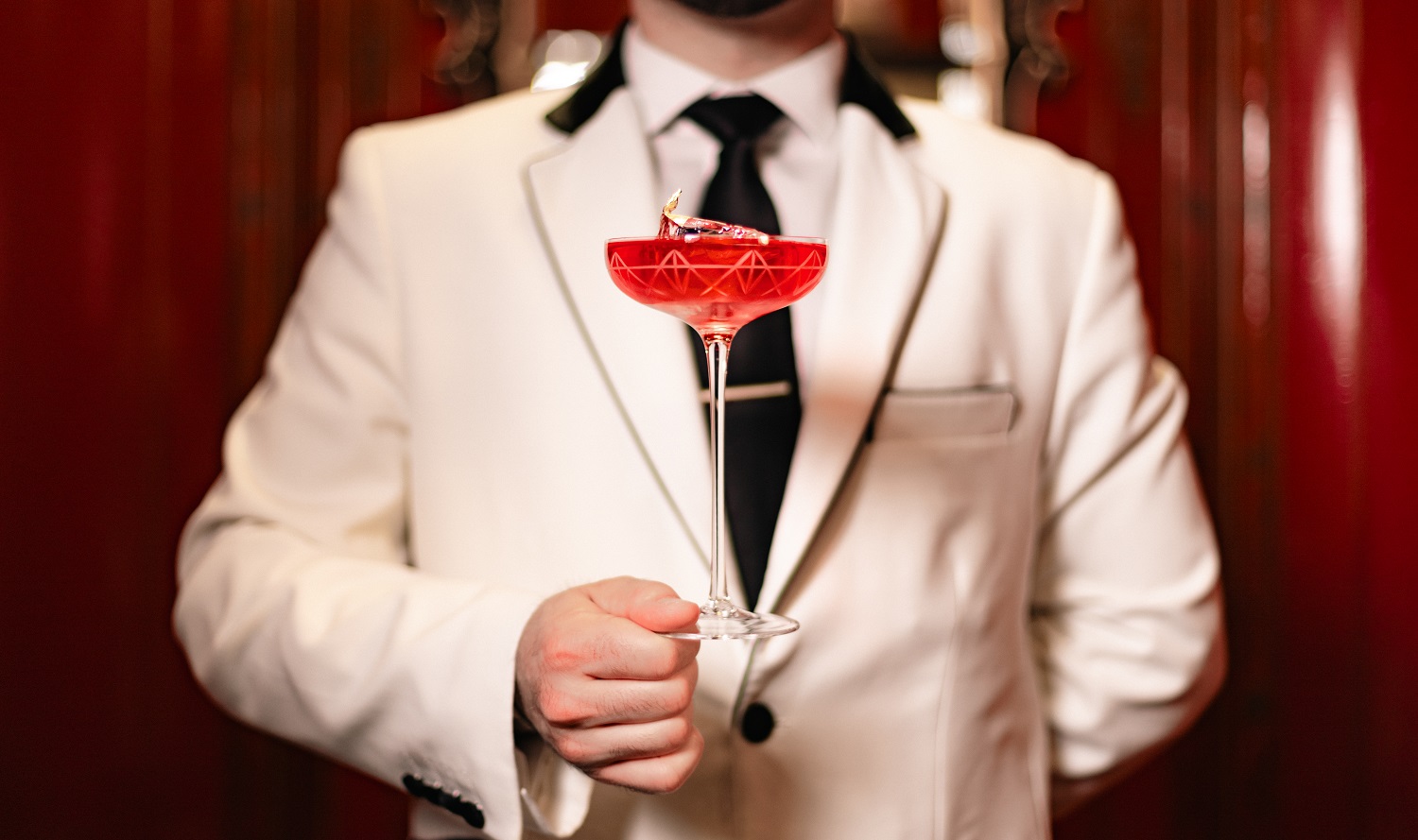
Is the Savoy’s American Bar the Manchester United of bars? The head bartender’s seat is empty once again.
Γιαννης Κοροβεσης•Articles
Disclaimer: AI translation
A legendary club, one of the most historic in England. A lifelong dream for players from every corner of the world to wear its shirt and, even more so, one to coach it. For decades, that burden was carried by one man: Sir Alex Ferguson. His long tenure delivered trophies, continuity, millions of supporters, and elevated the club’s aura to its peak. The role itself gained institutional weight and authority. After his departure, Manchester United remained a global brand at the top of the game, but the meaning of the manager’s position changed. It became temporary, time-bound. So how does all this relate to the American Bar of the legendary Savoy Hotel?
Only a few days have passed since the dismissal of Ruben Amorim, United’s manager for just over a year. He was the eleventh in twelve years, following Sir Alex’s 26-year reign. Running on parallel tracks, the American Bar has just announced that its head bartender position is once again vacant, for the fourth time in eight years, while until 2018, across its entire 125-year history, only eleven professional bartenders had ever held the role.
Another shared point between the two institutions is ownership. United went through three major ownership phases, with the last one, the Edwards family, remaining at the helm for a full 44 years. (Fun fact: John Henry Davies, the club’s owner between 1902 and 1927, was a brewer in Manchester.) By contrast, from the Savoy’s opening in 1889 until the early 2000s, ownership and management remained in the hands of the D’Oyly Carte family, more about whom I have written here. The 21st century found the hotel and its bars under a corporate joint-venture structure, with Fairmont Hotels and Resorts managing the property to this day. The ownership fund reportedly includes both Katara Hospitality (largely controlled by Prince Alwaleed bin Talal) and Kingdom Holding Company.
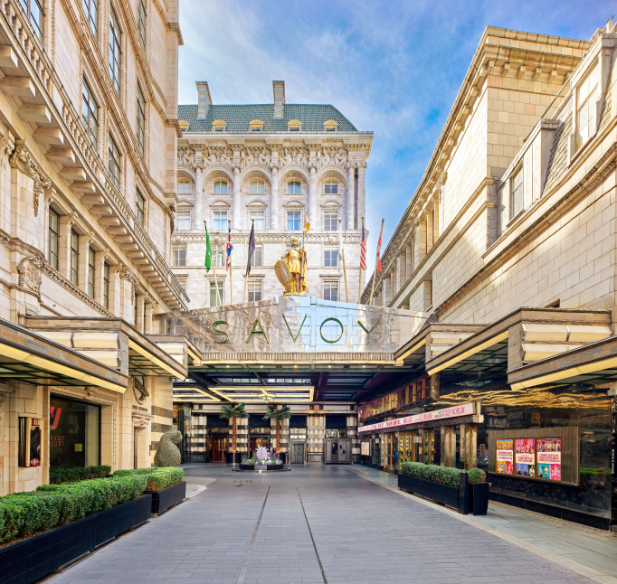
All of this sounds reasonable. But how can this sharp shift in the tenure of the American Bar’s head bartenders be interpreted within today’s hospitality landscape? From an average of 11 years until 2018 and the departure of Erik Lorincz, the last long-serving figure at the helm, to less than two years today?
Most recently, Angelo Sparvoli was appointed on March 25, 2024, with his departure announced on January 7 of the current year. Particularly striking is the case of Shannon Tebay, the first woman to lead the bar since the legendary Ada Coleman, who remained in the role for just nine months —from August 2021 to May 2022— setting a negative record. Ada Coleman, by contrast, held the position for a full 23 years before handing it over to Harry Craddock.
In Sparvoli’s defence, while he served as head bartender for just over a year, he had already worked at the Savoy for six years in total, rising from bar back to the top role. Still, looking at the contrast before and after 2018, doesn’t this change stand out? Isn’t this shift in habits and expectations worth examining? Is there an explanation? What follows is an attempt at a sober one (pun intented).
From “safe harbour” to just another stop along the way
For most head bartenders prior to 2018, the American Bar was something close to a final destination. Frank Wells (1893–1902), Ada Coleman (1903–1926), Joe Gilmore (1954–1975) and Peter Dorelli (1985–2003) all retired after their tenure. For others, such as Harry Craddock (1926–1938) or Erik Lorincz (2010–2018), the London bar defined their careers so completely that they became almost inseparable from it. The role meant social mobility, financial security and an almost lifelong identity.
Today, in an era of dozens of equally strong bars, the Savoy’s allure often functions as a prestigious addition to a bartender’s CV. After a stint at the Savoy typically come brand collaborations, lucrative contracts, new openings, consulting, education, travel and speaking engagements worldwide. The position can act as a passport to an entirely new professional life.
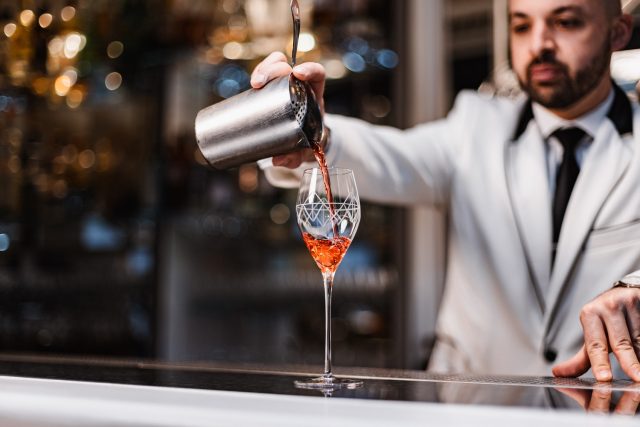
Angelo Sparvoli
Ownership and the management model
The Savoy of the 20th century largely operated on long-term trust. Management invested in professionals who were not merely employees, but custodians of a specific style, tradition and collective memory. Longevity was an asset. Stability was something one embodied.
Success was measured through reputation and repeat clientele, through remaining a reference point over time. The relationship was almost paternalistic: the Savoy offered security and prestige; the head bartender devoted an entire lifetime.
In the 21st century, the framework changes. The Savoy becomes part of international hospitality structures with layered management and external stakeholders. Success is now defined through KPIs, brand consistency and globally comparable results. The head bartender is no longer judged on preserving myth, but on activating it commercially.
In such an environment, staying in the same role ceases to be an end in itself. Performance outweighs duration. Even successful tenures become finite. Renewal is preferred over continuity. Pause and think about it for a moment.
The changing substance of the role
For much of the 20th century, the head bartender at the Savoy’s American Bar had a clearly defined and limited scope: managing the team, drink quality, the rhythm of the room and its social code. The bar’s public image belonged to the Savoy itself. The head bartender was an internal pillar, not an external representative.
The work was repetitive and stable. Menus evolved slowly. Cocktail creation was limited. Fewer drinks were made, yet they became iconic. The pace allowed for long careers without burnout.
Today, the role has expanded abruptly. With the rise of the internet and influencer marketing, the modern head bartender is expected to be a brand ambassador —or more accurately, a media asset. Interviews, talks, events and brand collaborations are now part of the job, alongside constant reinvention of concept, narrative and image. The pace is relentless, and the more tightly a person is publicly bound to a brand, the faster that association exhausts itself. In many cases, leaving simply marks the end of a cycle the system itself permits.

The Savoy is no longer unique
In the previous century, very few venues carried global reference value. For many years, the American Bar sat at the top of a relatively closed ecosystem. For a fully realised professional, there was nowhere higher to go. Reputation was built slowly, passed by word of mouth and rarely extended beyond a city without institutional platforms such as the American Bar. The summit was singular and clearly defined.
Today, prestige is distributed across hundreds of bars, luxury hotel groups and strong personal brands operating independently of place. Recognition depends on visibility, narrative and mobility. The Savoy remains at the top. It is simply no longer the only one. Leaving the role no longer means stepping down. It means moving sideways.
I asked George Tsirikos —veteran bartender, co-creator of Three Cents, former London resident who had worked behind a London bar (one of the country’s first shaker-drain setups)— to share his perspective.
——————————————————–
I remember it as if it were yesterday, the first time I saw Erik Lorincz win the World Class competıtıon with absurd ease, pulling off what was, without question, the most super cool pour cut in the competition’s history. I immediately started trying to imitate him, to the point where my mother would kick me out of the kitchen, which I had flooded with water in my attempts to get it right.
When it was announced, a few weeks later, that he would be taking over the legendary American Bar at The Savoy, my only thought was that no other bartender deserved the position more. As the Americans would say, it was ”a match made in heaven”.
It took years before I finally walked into the Savoy to drink one of his cocktails. And the reason I went, in fact, was to present Three Cents to him. I distinctly remember that when we went looking for him, we couldn’t find him behind the bar. A waitress helped us by going to wake him up (it was before his shift, early afternoon if I recall correctly), explaining that he worked so much he barely had time to sleep.
We thought, fair enough. The pressure must be immense. After all, this was the most historic bar in the world, with enormous responsibility. It seemed logical.
From the moment Erik left, I honestly can’t recall a single name or even a face among the many bar managers who followed. At the same time, within bartender circles, the reputation of the American Bar began to fade. Other venues started taking its place on the global stage. And if I remember correctly, Erik Lorincz’s own bar in London (Ed. Kwãnt Mayfair) had, at one point, surpassed the American Bar in popularity (based on votes in the 50 Best Bars awards.)
Being slightly older, I sometimes worry that my mind drifts toward the familiar phrase: “things were better back then.” In the case of Lorincz and the Savoy, that was my initial reaction. That he was the last truly great and worthy bartender, and that everyone who followed was mediocre and therefore left. Of course, that’s a flawed conclusion. I’m not that old, for one thing, and there are clearly far more factors at play.
My first —admittedly not very serious— thought in trying to analyse the departure of five head bartenders in just eight years was that maybe London still pays the same miserable day rate they paid me, gross, back in 2012. Could the modern-day Harry Craddock really be earning £1,400 gross a month? I quickly realised, though, that it probably wasn’t just that. One of the thorns of the modern Savoy seems to be the heavy corporate layer introduced by management, which, combined with reported losses of around £20 million, appears to have turned even the bar manager’s role into something less creative than a cashier at a seaside club.
Maybe it’s simply something old that has aged even further. Its aura now visible only to the so-called “old guard,” while contemporary bartenders don’t want to wear suits all day, listen to classical music, and operate in an environment that no longer represents them. And perhaps all of this is nothing more than a sign of the times.
——————————————————–
Today, the Premier League remains a global reference point in football. Inevitably, the Manchester club, even when it is not at the top, continues to command attention alongside other great teams. Its power no longer rests exclusively on performance —unless it drops to the Championship— but on its position within the ecosystem.
The Savoy operates in a comparable framework. It is located in London, a city many regard as the global capital of cocktails and bars, and it still carries one of the heaviest names in history. It may be managing the transition more smoothly than United, yet its brand name no longer functions as an automatic marker of superiority.
The environment has changed. The times now demand constant renewal, new narratives, and continuous content production. Even the most historic institutions are forced to reintroduce themselves. And within this context, the frequent turnover at the top is perhaps simply one of the ways institutions try to remain visible. Will an individual take root again at the American Bar?
Or is the real question whether the American Bar will remain as we once knew it —or whether it, too, will change entirely, along with the world around it?
AUTHOR