If there’s one thing that defines today’s sustainability conversation in hospitality, it’s the focus on visible actions. Big or small, but always things you can see. Investments that photograph well. Practices that turn into talking points. Solutions that double as statements. In reality, though, a large part of the real footprint of a bar, a home, or any business is shaped by systems and processes that rarely attract attention. More often than not, they come down to habits and actions repeated dozens or even hundreds of times a day. And that’s where small improvements can add up to a disproportionately large impact. A smart flow management, through the use of vortex flush, seems that falls under this category.
This is exactly the logic behind Lost + Found Drinkery’s choice to install vortex, or tornado-style, toilet flushing systems. It’s essentially a rational rethink of water consumption in a place most people take for granted, and therefore rarely question in terms of efficiency or savings.
Unlike traditional gravity-based systems, where water simply drops straight down to flush the bowl, vortex and tornado systems create a powerful circular flow. The result is a more thorough clean of the entire bowl, using significantly less water per flush.
In high-traffic spaces like a bar, this difference is anything but theoretical. Even saving one to one-and-a-half liters per flush, when repeated hundreds of times a day, quickly turns into thousands of liters over time. Small habits, repeated consistently, create real impact.
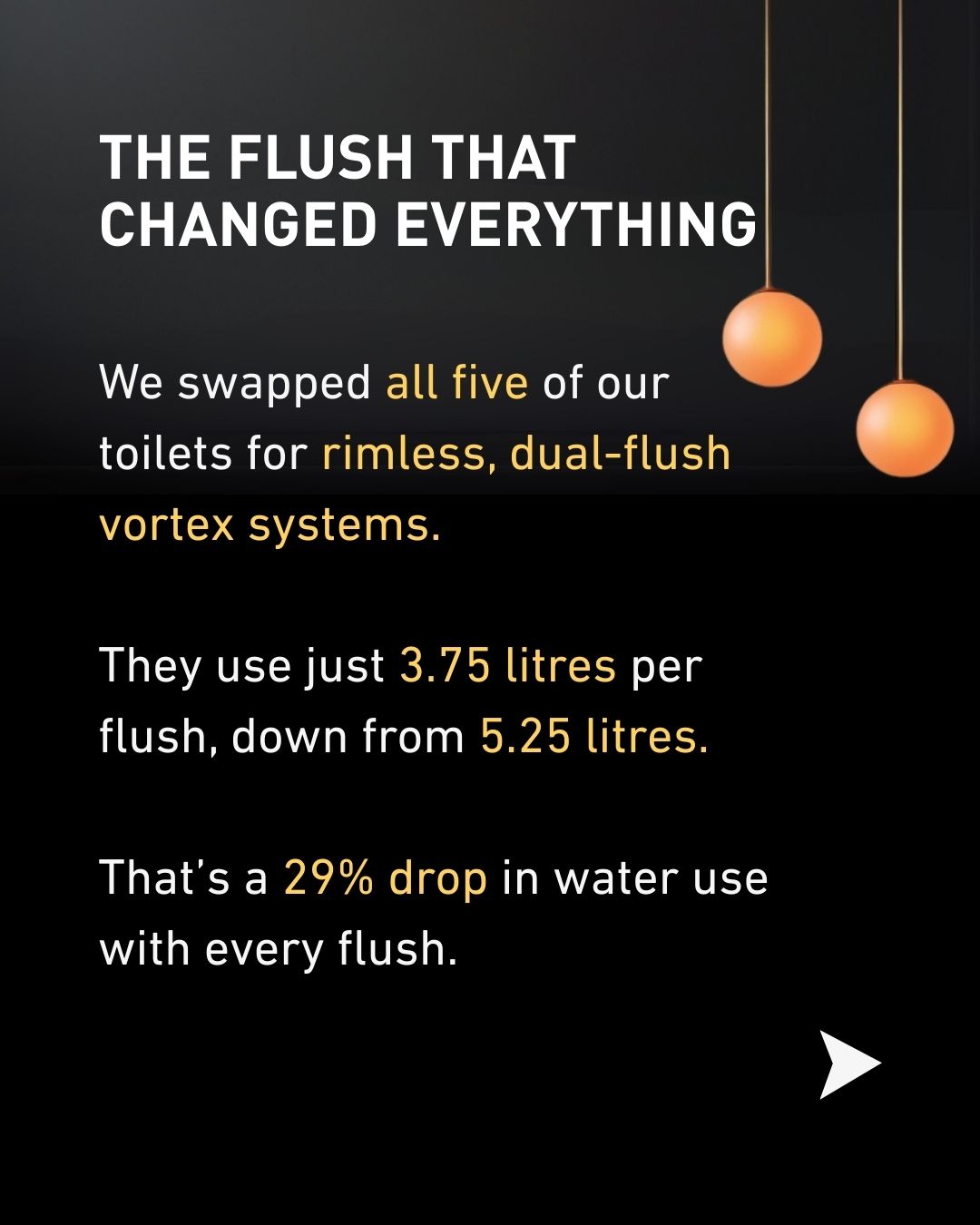
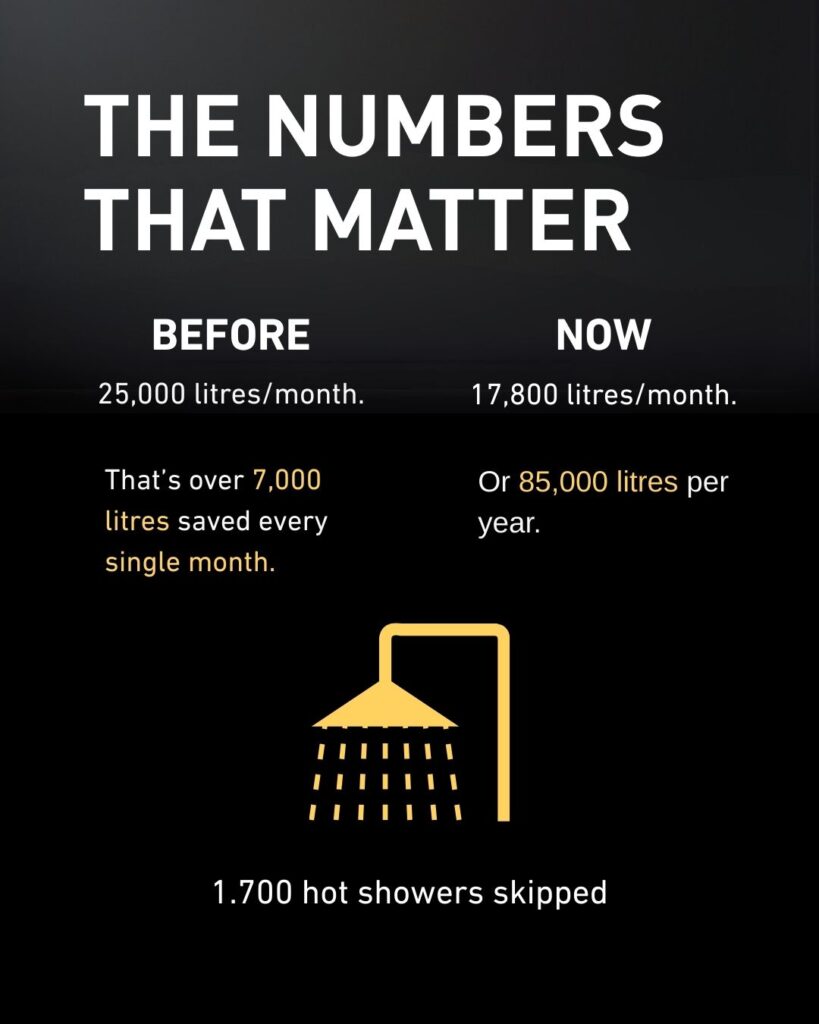
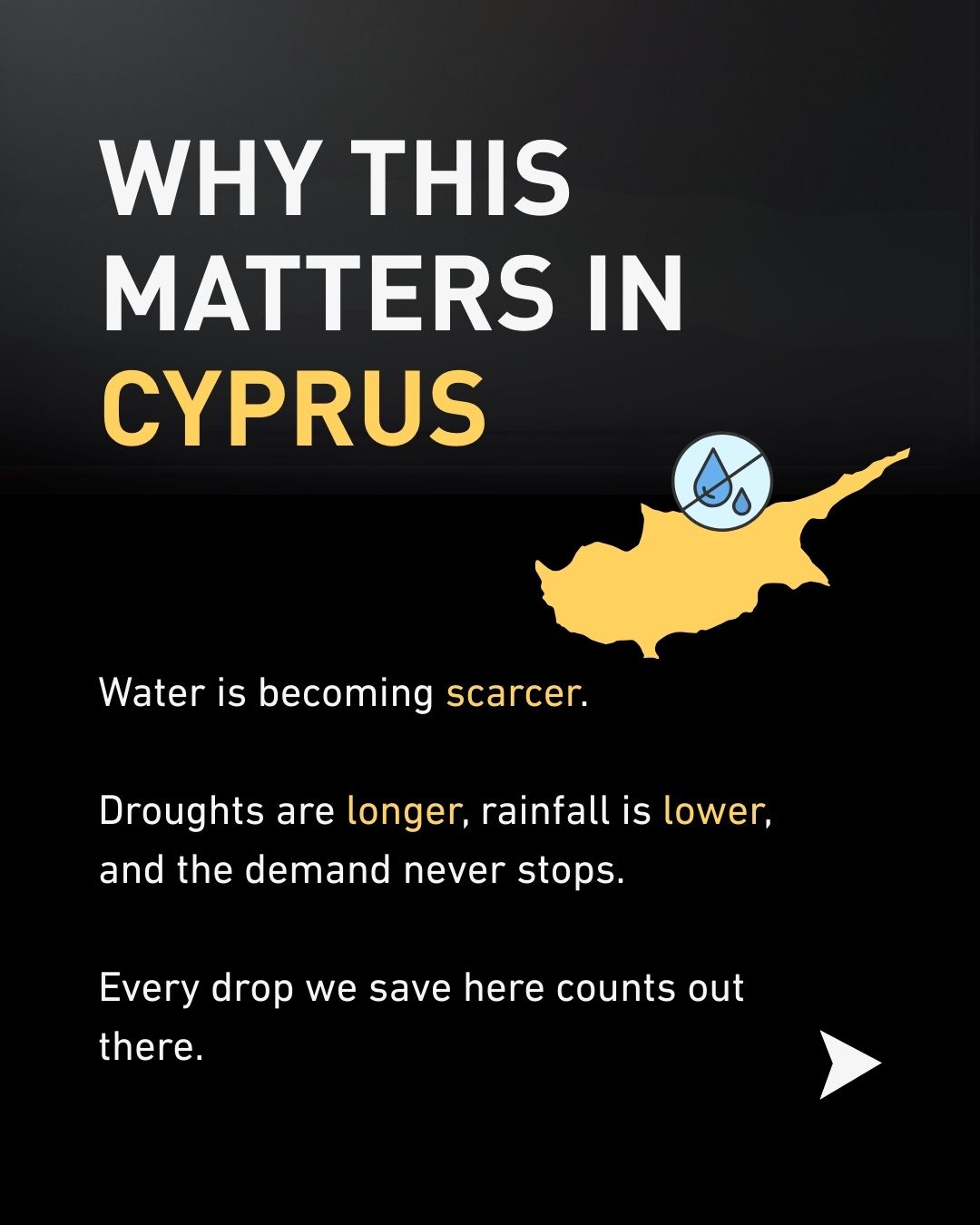
In the case of Lost + Found, the team calculated that with the systems installed across all five toilet bowls, each flush uses 29% less water: 3.75 liters instead of 5.25. Based on visitor estimates calculated with the help of AI algorithms, that translates to roughly 17,800 liters of water per month instead of 25,000. In other words, around 7,000 liters saved every month, or approximately 85,000 liters per year. In countries like Cyprus and Greece, where climate conditions are becoming increasingly severe due to climate change, water remains one of the most valuable resources. Beyond lowering operating costs for the business, water scarcity is a reality that demands a reduction in waste.
This choice also comes with a second, equally important benefit: hygiene. Rimless toilet designs, with no internal rim, eliminate hidden areas where residue and bacteria typically build up. That means less need for aggressive cleaning, lower use of chemicals, and a more consistent level of cleanliness day to day. Here too, the benefit isn’t just environmental. It’s operational, affecting both the team and the guest experience.
Of course, replacing existing infrastructure isn’t always immediately possible. Even then, there are low-cost interim solutions built on the same logic of smarter flow. A simple trick like placing a filled 500 ml plastic bottle inside the tank reduces the amount of water used per refill, cutting consumption without changing the flushing mechanism. It’s not perfect. But it works. And most importantly, it works right away.
That’s the point of this practice. Efficiency doesn’t always come from big investments or headline-grabbing interventions. Often, it comes from understanding flow. Where resources are consumed, how often, and with what real outcome. When that understanding is applied to areas with high repetition, the overall benefit becomes visible very quickly.
Optimizing water use, even in something as mundane as a toilet, is just one part of a broader approach that prioritizes efficiency, reduces waste, and strengthens the long-term resilience of the business.